






Frequently Asked Questions
1: How much does epoxy garage floor coating cost in Mississauga?
Epoxy garage floor coating in Mississauga costs between $4 and $15 per square foot installed, depending on the system chosen and the condition of the slab. Solid opaque systems start around $4 to $6 per sq ft. Flake broadcast systems run $6 to $9. Metallic finishes range from $8 to $12. Quartz systems for heavy commercial use reach $10 to $15. A typical two-car garage in Mississauga comes in between $2,400 and $4,800. Slabs with moisture issues, oil contamination, or heavy cracking require more prep work, which adds to the final cost. Mississauga pricing runs approximately 10% above the national Canadian average due to local labour rates and GTA demand. Always get a written quote before any work begins.
2: How long does a garage epoxy floor last in Mississauga's climate?
A professionally installed epoxy garage floor in Mississauga lasts between 10 and 20 years with basic maintenance. The key variables are surface preparation quality, the system used, and the topcoat selected. Floors installed with proper diamond grinding, moisture-blocking primer, and a polyaspartic topcoat consistently outperform those done with acid etching and a standard epoxy topcoat. Mississauga’s freeze-thaw cycle and heavy road salt use put real stress on unprotected or poorly coated slabs, but a correctly specified system handles both. DIY kit floors typically last 2 to 5 years before peeling. Professional installations with full prep last significantly longer.
3: Do I need a permit for garage floor epoxy in Mississauga?
No. Epoxy garage floor coating does not require a building permit in Mississauga. It is a surface treatment, not a structural change, and falls outside permit requirements from the City of Mississauga. If your garage renovation includes additional electrical work such as EV charging stations or upgraded lighting, that work requires ESA approval and a licensed electrician, but the floor coating itself does not. If you are unsure about any aspect of your garage project, the City of Mississauga’s building department can confirm requirements specific to your property.
4: What is the best epoxy system for a Mississauga garage?
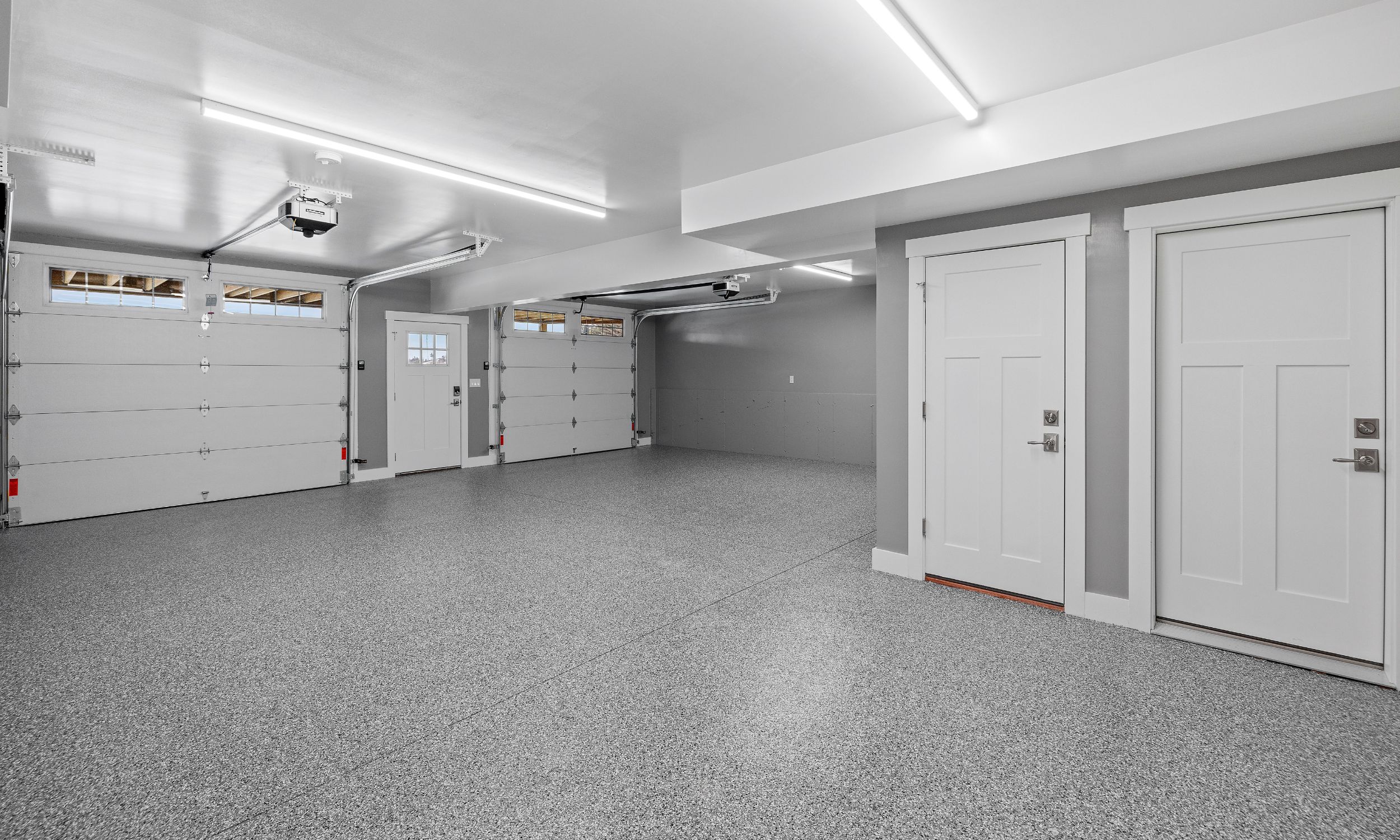
Flake epoxy with a polyaspartic topcoat is the most practical choice for most Mississauga residential garages. The vinyl chip layer hides tire marks and surface scuffs, adds slip resistance, and holds colour well over time. The polyaspartic topcoat is UV-stable, more scratch-resistant than a standard epoxy topcoat, and better suited to Ontario’s freeze-thaw conditions. For higher-end finishes in upscale properties, metallic epoxy delivers a showroom look with the same durability. For commercial bays, fleet storage, or high-traffic applications, quartz epoxy provides maximum wear resistance. The right system depends on your slab condition, how you use the space, and your budget.
5: Can epoxy be installed in winter in Mississauga?
No. Epoxy cannot be reliably installed during Mississauga winters. Epoxy requires surface and air temperatures consistently above 10 degrees Celsius throughout the 48 to 72 hour cure period. Mississauga winters regularly reach minus 20 degrees Celsius. If the concrete is too cold, the epoxy will not cure correctly, the bond fails, and the coating needs to be stripped and redone at full cost. The installation window in Mississauga runs from May through October. If you are planning a garage floor project, booking early in the season is strongly recommended because summer slots fill quickly.
6: How long before I can drive on a new epoxy garage floor?
Vehicles should stay off a new epoxy garage floor for at least 72 hours after installation. Foot traffic is safe after 24 hours, but light use only. Full chemical cure takes 7 days, and during this period the floor is still hardening and reaching its final strength and chemical resistance. Parking a car on the floor before 72 hours risks surface impressions and damage to the finish. If your installer cannot give you a written cure schedule with these timelines, ask for one before work begins.
7: What causes epoxy garage floors to peel or delaminate?
The most common cause of epoxy peeling in Mississauga garages is inadequate surface preparation, specifically skipping moisture testing or using acid etching instead of mechanical grinding. Mississauga’s clay soil creates hydrostatic pressure under slabs. If that moisture is not addressed with a blocking primer, it pushes up through the concrete and lifts the coating from underneath. Other causes include coating applied over oil-contaminated concrete, installation outside the correct temperature window, using a DIY kit over a slab that needed professional prep, and applying a new coating over an existing failed coating without removal. In all cases, the fix starts with proper prep, not a better product.
8: Does epoxy garage floor coating increase home value in Mississauga?
Yes, a finished epoxy garage floor is considered a value-adding improvement in the Mississauga real estate market. GTA real estate agents consistently note that finished, clean garages improve buyer perception and support faster sales, particularly in Mississauga’s competitive housing market where buyers compare properties closely. The improvement will not increase your appraised value dollar for dollar, but it reduces buyer objections, signals well-maintained property, and stands out in listings. For homeowners not planning to sell, the long-term value is practical: a sealed floor is easier to clean, resists staining, and holds up far longer than bare concrete.
9: How do I maintain an epoxy garage floor in Mississauga?
Epoxy garage floors require very little maintenance. Sweep or blow out dust and debris regularly to prevent grit from scratching the surface. Mop with a pH-neutral cleaner when needed and avoid harsh acids, bleach, or abrasive chemicals. Wipe up oil, brake fluid, and chemical spills promptly as prolonged contact can stain or soften certain topcoats. In winter, avoid dragging metal snow shovels directly across the surface. Avoid sharp-edged equipment or heavy items dropped from height. Polyaspartic topcoats generally do not need resealing. Standard epoxy topcoats may benefit from a fresh seal coat every 5 to 7 years depending on use. Inspect edges and control joints annually for any signs of lifting.