





Frequently Asked Questions
Does GLI Epoxy Flooring offer quartz flooring installation services in Mississauga?
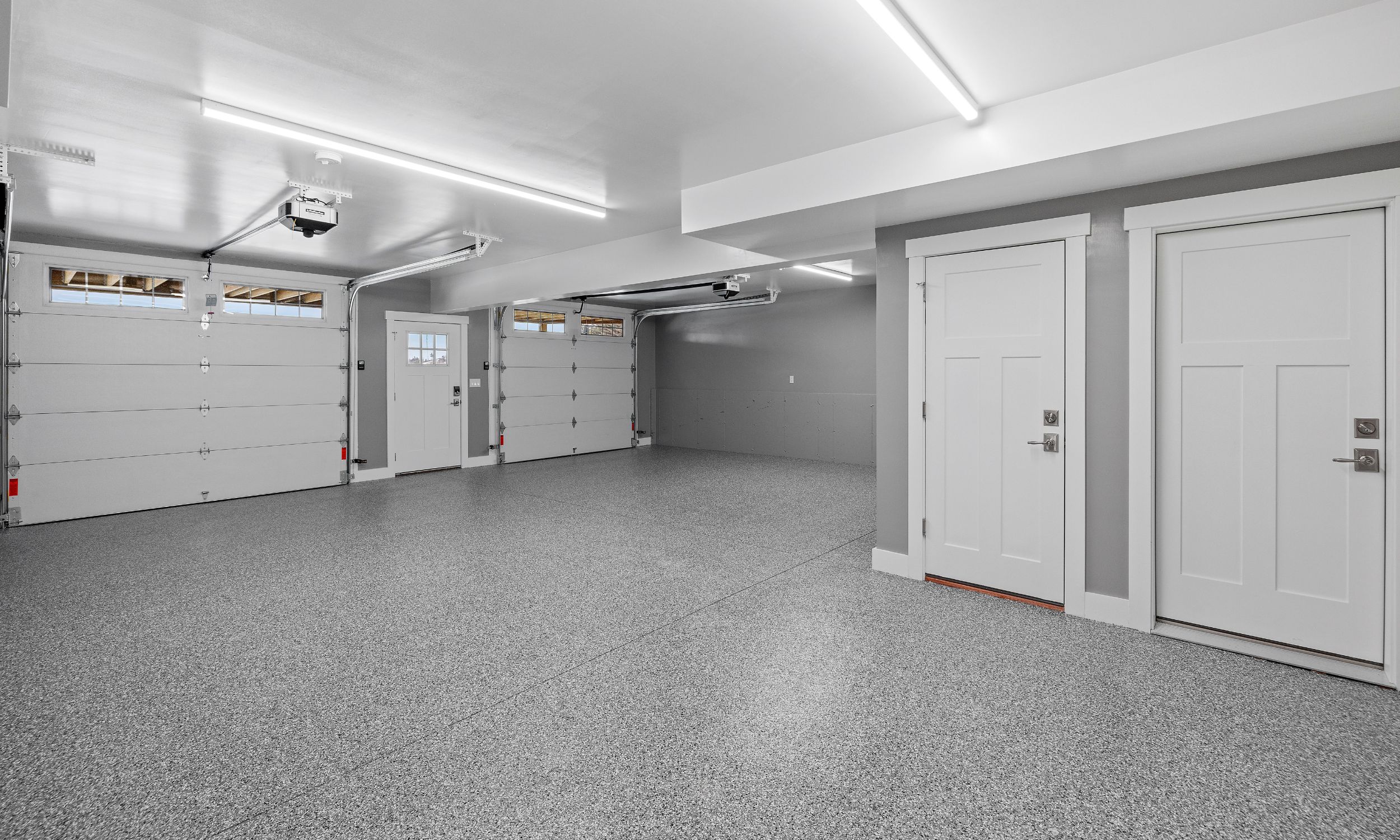
Yes. We install epoxy quartz flooring throughout Mississauga for garages, commercial kitchens, and industrial spaces. Every project starts with a free, on-site look at your concrete. From there, we recommend a system and give you a written quote.
How long does epoxy quartz flooring take to install?
Most quartz projects take two to four days, depending on the size of the space and whether you choose a single or double broadcast. Cure time before the floor returns to full use adds extra time beyond the install.
What areas does GLI Epoxy Flooring serve for quartz flooring?
We install epoxy quartz flooring in Mississauga. We also serve nearby GTA cities, including Toronto, Brampton, and Oakville. Contact us to confirm coverage if your property is in a different area.
How much does epoxy quartz flooring cost?
Cost depends on your slab condition, the size of the space, and whether you choose a single or double broadcast. Because every project is different, the most accurate way to get a number is a free on-site quote.
How much would it cost to epoxy 1000 square feet?
Pricing for a 1,000 square foot space depends on the same factors as any project: slab condition, broadcast density, and topcoat choice. Rather than guess, we recommend a free on-site assessment for an accurate number.
What is the disadvantage of epoxy resin flooring in general?
Any epoxy floor needs proper surface prep to bond correctly. Skipping this step is the top reason coatings fail. Epoxy floors can also need a fresh topcoat every several years in busy spaces. Repairs can be tricky to blend in too.
What is epoxy quartz flooring?
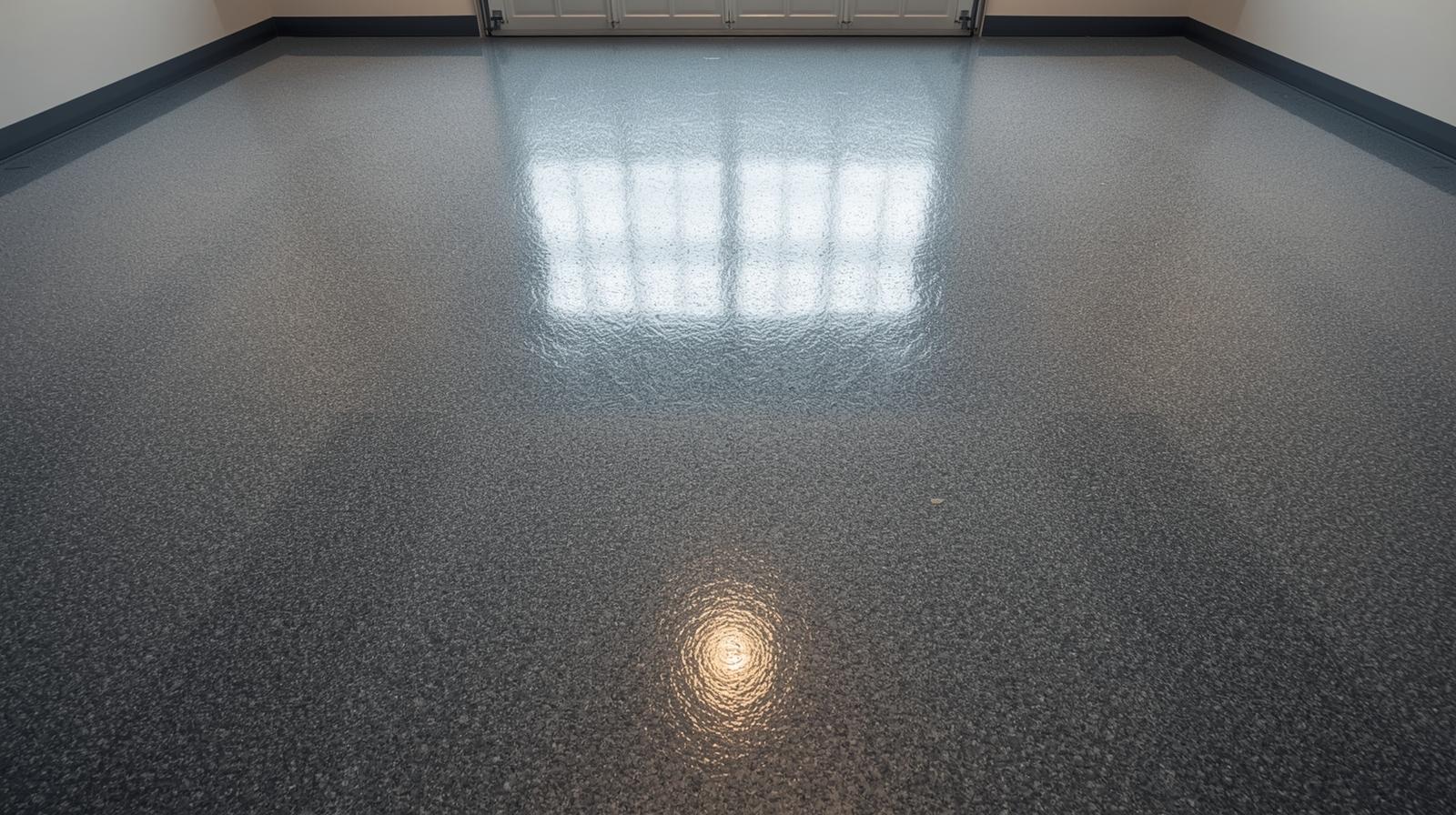
Epoxy quartz flooring is a broadcast system. It uses colored quartz sand instead of vinyl flakes or metallic pigments. The quartz gets broadcast into a wet epoxy base coat. A topcoat then seals it for durability and slip resistance.
How is quartz epoxy flooring applied?
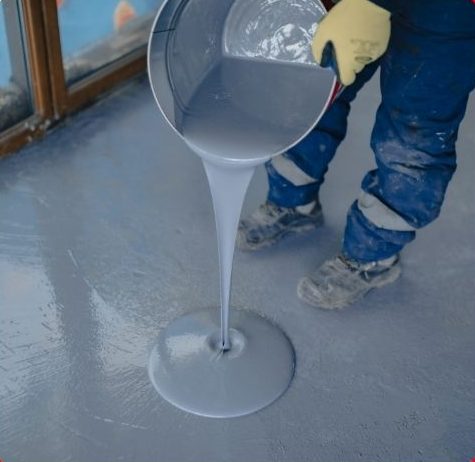
A professional installer grinds and preps the concrete, applies a pigmented base coat, broadcasts quartz sand into the wet coating, then seals everything with a topcoat. Each step needs the right timing and conditions to cure properly.
What is the difference between quartz and flake epoxy floors?
Quartz flooring uses sand-like granules broadcast into the base coat. This adds slip resistance and a denser texture. Flake flooring uses larger, flat vinyl chips. This creates more of a decorative, multi-color pattern.
What are the pros and cons of quartz epoxy flooring?
Quartz flooring offers strong slip resistance, chemical resistance, and durability. This makes it a good fit for wet or high-traffic areas. The main downsides are a higher cost than solid epoxy and the need for professional installation.
What is the downside of epoxy flooring in general?
Any epoxy system depends on proper surface prep. Shortcuts here are the top reason coatings peel or bubble. Epoxy floors can also be slippery when wet without an added texture. Matching a repair to an existing floor is not always exact.