A garage floor takes a beating in Toronto. Road salt, hot tyres, and freeze-thaw cycles wear through cheap coatings fast. Homeowners searching for the best garage flooring options for Canadian homes want one thing. A floor that survives winter without a repeat renovation.
GLI Epoxy Flooring has handled epoxy garage floor installation in Toronto for years. That experience shows which options hold up and which ones fail fast.
What Should a Garage Floor in Canada Actually Be Able to Handle?
Canadian winters put four demands on a garage floor. Temperatures swing from deep freezes to spring thaws many times each season. That constant movement stresses any surface bonded to concrete.
Road salt tracked in from driveways is corrosive and finds every weak seam. Hot tyre pickup is another risk, where warm rubber grabs a soft coating and pulls it loose. That damage often shows up in the very first winter.
Garage and basement slabs across Southern Ontario carry moisture pressure too. Clay-heavy soil pushes that moisture upward into the concrete. Every option below gets judged against these four demands.
How Does Epoxy Coating Perform in Canadian Garages?
Epoxy is the most familiar coating on this list. Professional-grade epoxy still earns its place. A two-part resin and hardener bonds tightly to properly ground concrete.
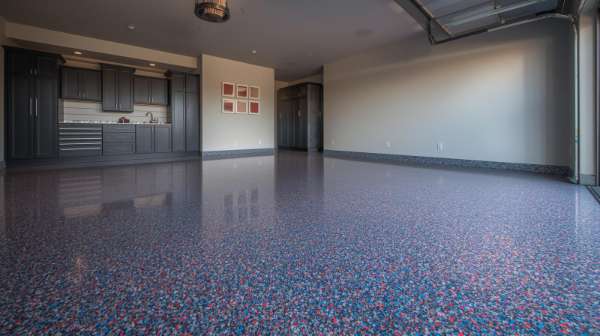
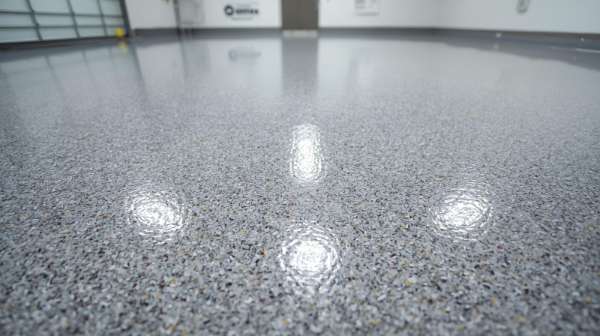
That bond resists oil, gasoline, and cleaning chemicals well. GLI Epoxy Flooring installs decorative flake epoxy systems across the GTA. The flakes add slip resistance without losing that chemical resistance.
Epoxy has two weaknesses in this climate. It ambers slightly under UV light, and it can crack near the garage door as concrete freezes and thaws. Even so, professional epoxy typically lasts seven to twelve years in a GTA garage.
A professional assessment catches moisture and slab issues before they turn into a failed floor. Free on-site quotes are available across the GTA, with diamond grinding and proper prep included in every estimate. Call 289-236-8371 or request a quote to find out which system fits the space.
Is Polyaspartic Worth the Extra Cost for a Canadian Garage?
Polyaspartic is a fast-curing aliphatic polyurea. Most professional installers in Ontario recommend it by default. It cures in hours instead of days.
Polyaspartic resists UV yellowing completely. It also stays flexible enough to move with concrete through freeze-thaw cycling instead of cracking.
The tradeoff is upfront cost, since polyaspartic runs higher per square foot than epoxy. That gap narrows once lifespan enters the calculation. A polyaspartic floor typically lasts fifteen to twenty years with professional installation.
What About Polyurea Coatings for Heavy-Use Garages?
Polyurea sits between epoxy and polyaspartic in most searches. The two are chemically related, which causes confusion. Pure polyurea cures in minutes, which suits industrial floors.
That fast cure makes it hard to hand-apply well in a home garage. It usually needs specialised spray equipment. GLI Epoxy Flooring more often recommends a polyurea base coat under a polyaspartic topcoat instead.
That hybrid suits garages with unusually heavy use, such as multi-vehicle households or home-based trade work. It combines deep adhesion with a UV-stable, flexible surface. Ask about it directly rather than assuming standard polyaspartic covers every case.
Do Interlocking Tiles and Mats Hold Up in Canadian Winters?
Not every homeowner wants a bonded coating. Tile and mat systems remain a real option for specific situations.
Interlocking PVC Tiles
Interlocking tiles snap together over existing concrete. No grinding or curing time is needed, which makes them the fastest option here. Water also drains beneath the raised tile pattern instead of sitting on top.
The tradeoff shows up in extreme cold. PVC contracts more than concrete during a deep freeze, which can open gaps at the seams. Tiles can also shift under a heavy vehicle if the edges were not fitted tightly to the wall.
Roll-Out Vinyl and Rubber Mats
Roll-out vinyl and rubber mats are the simplest option to install. They are also the easiest to replace, section by section. Both add cushioning underfoot, which no coating can offer.
Neither option bonds to the slab, though. That means neither one stops moisture, salt, or cracking from reaching the concrete underneath. Homeowners choosing this route protect the look of the floor, not the concrete itself.
Should You Consider Polished Concrete Instead of a Coating?
Polished concrete mechanically grinds and densifies the existing slab. It skips the coating step entirely. The result is a durable, low-maintenance surface with real longevity, since there is no topcoat to peel or yellow.
Polished concrete has one real limit in unheated Canadian garages. Without a freeze-thaw-rated sealer, salt and moisture can still penetrate the porous surface. That causes pitting over several winters.
It suits heated garages and light-use spaces well. A daily-driver garage exposed to constant winter tracking and road salt is a tougher fit for this option.
How Do These Garage Flooring Options Compare Side by Side?
None of the options above wins in every category. That is exactly why homeowners compare them side by side before deciding.
| Option | Durability | Winter Performance | Install Time | Typical Lifespan | Best For |
|---|---|---|---|---|---|
| Professional epoxy | High | Moderate, can micro-crack | 2 to 3 days | 7 to 12 years | Indoor, budget-conscious garages |
| Polyaspartic | High | Excellent | About 1 day | 15 to 20 years | Most Canadian garages |
| Polyurea base + polyaspartic topcoat | Very high | Excellent | 1 to 2 days | 15 to 20+ years | Heavy-use garages |
| Interlocking PVC tiles | Moderate | Good, edge-lifting risk | Hours | 5 to 10 years | Renters, quick upgrades |
| Roll-out vinyl or rubber mats | Low to moderate | Fair | Hours | 3 to 7 years | Budget projects, cushioning |
| Polished concrete | High | Fair, needs sealer | 1 to 2 days | 10 to 15+ years | Heated garages |
The polyaspartic and hybrid systems consistently top the winter performance column. That is why professional installers across the GTA default to recommending them for daily-driver garages.
What Does Garage Flooring Cost in the GTA in 2026?
| Option | Cost per Sq Ft (Installed) | 2-Car Garage, About 450 Sq Ft |
|---|---|---|
| Professional epoxy | $4 to $9 | $1,800 to $4,050 |
| Polyaspartic | $7 to $14 | $3,150 to $6,300 |
| Polyurea base + polyaspartic topcoat | $7 to $12 | $3,150 to $5,400 |
| Interlocking PVC tiles | $3 to $9 | $1,350 to $4,050 |
| Roll-out vinyl or rubber mats | $1 to $5 | $450 to $2,250 |
| Polished concrete | $5 to $10 | $2,250 to $4,500 |
These 2026 figures vary by garage condition, ground moisture, and site access. A written on-site quote matters more than a phone estimate. A full residential epoxy flooring installation breakdown gives more accurate GTA pricing than a flat per-square-foot number.
Why Does Surface Preparation Determine How Long Any Option Lasts?
Every option here depends more on surface preparation than on the product label. Diamond grinding opens the concrete’s pores. It also removes old sealers, oil, and curing compounds that block adhesion.
Skipping that step is the single most common reason a coating peels within two years. This holds true regardless of brand or price.
Professional surface preparation also includes moisture testing before anything touches the slab. GTA basements and attached garages sit on clay-heavy soil that pushes moisture upward year-round. A coating applied without that test has no reliable path to a long service life.
What if a Garage Floor Already Has Cracks or Damage First?
A cracked or pitted slab needs attention before any flooring option goes down. This applies to both coating and non-coating options. Small cracks widen every winter as water seeps in, freezes, and expands.
Coating over an active crack simply telegraphs the damage through the new surface within a season. Concrete crack repair services address the root cause instead, whether that is foundation movement, poor drainage, or ordinary age.
Homeowners planning a garage floor upgrade should treat crack repair as step one. It should not be an afterthought squeezed in after the coating is already chosen.
Should Homeowners DIY a Garage Floor or Hire a Professional?
DIY kits exist for nearly every option on this list. The appeal is obvious: a weekend project and a few hundred dollars looks attractive next to a professional quote. The results rarely hold up the same way once an Ontario winter arrives.
Consumer epoxy kits typically use thirty to fifty per cent solids content. That leaves a thin film rather than a bonded structural layer. NRC Canada’s research on freeze-thaw durability in porous building materials explains why that matters.
Repeated freezing and thawing stresses any surface not fully bonded to the concrete. That is why thin DIY films fail faster in this climate. Tile and mat systems are more DIY-friendly, but they still need a flat, clean slab.
Which Garage Flooring Option Is Best for a Toronto or GTA Home?
The right choice depends on how the garage actually gets used. A heated, low-traffic garage suits polished concrete or standard epoxy well. A daily-driver garage exposed to road salt and winter parking benefits most from polyaspartic or a polyurea hybrid.
This pattern is common across North York, Vaughan, and Mississauga alike. A rental property or short-term living situation may only justify interlocking tiles or roll-out mats.
Budget matters too, but the ten-year cost usually favours the higher-performing systems. That is, once repeat installs and removal costs from a failed floor enter the picture. Homeowners in Barrie and Muskoka, with longer and harsher winters, see the clearest benefit from freeze-thaw-resistant systems.
Conclusion
Garage flooring in a Canadian climate comes down to matching the option to actual use. The price tag on installation day matters less than the fit. Coatings built for freeze-thaw movement and road salt exposure outlast tile, mat, and DIY alternatives across a GTA winter.
GLI Epoxy Flooring has installed and repaired every option on this list across the GTA. That experience shapes every recommendation made on-site. Homeowners weighing a DIY install should read about the real risks of a DIY garage floor installation first.
GLI Epoxy Flooring has helped GTA homeowners choose and install the right garage floor for years. Every estimate includes an on-site moisture and slab assessment at no charge. Call 289-236-8371 or visit the contact page to schedule a free assessment.
Frequently Asked Questions
1. What is the best garage flooring option for a Canadian home dealing with heavy snow and road salt?
Polyaspartic coating is the best option for Canadian homes facing heavy snow and road salt. It cures fast, stays flexible through freeze-thaw cycles, and resists salt damage far better than epoxy, tiles, mats, or DIY kits. Homeowners in harsher winter regions see the clearest benefit.
2. How much does it cost to epoxy coat a two-car garage floor in the GTA in 2026?
Epoxy coating a two-car garage floor of roughly 450 square feet in the GTA typically costs $1,800 to $4,050 installed in 2026, depending on the concrete’s condition, prep needs, and finish choice. Cracked slabs that need repair first push costs toward the higher end of the range.
3. Can polyaspartic or epoxy coatings be installed during an Ontario winter?
Polyaspartic coatings can be installed during an Ontario winter, since they apply down to minus ten degrees Celsius and cure within hours. Standard epoxy needs about ten degrees Celsius held steady for several days, ruling out most unheated garages from October through April each year.
4. Are interlocking garage tiles a good option for cold Canadian climates?
Interlocking tiles work reasonably well for fast, no-mess upgrades in cold Canadian climates, since they need no grinding or curing time at all. Extreme cold can cause edge lifting near the garage door, though, making bonded coatings a better long-term fit for daily-driver GTA garages.
5. What’s the real difference between epoxy, polyaspartic, and polyurea garage floor coatings?
Epoxy is rigid and prone to yellowing, polyaspartic is UV-stable and flexible, and pure polyurea cures in minutes but is hard to apply well at home without specialised equipment. Most professional GTA installers now use standalone polyaspartic or a polyurea base with a polyaspartic topcoat.
6. How long does a professionally installed garage floor coating last in Toronto compared to a DIY kit?
Professional polyaspartic lasts 15 to 20 years in a Toronto garage, and professional epoxy lasts 7 to 12 years by comparison. A typical DIY kit lasts just one to three years, since it uses thin, low-solids material without proper surface prep or moisture testing.