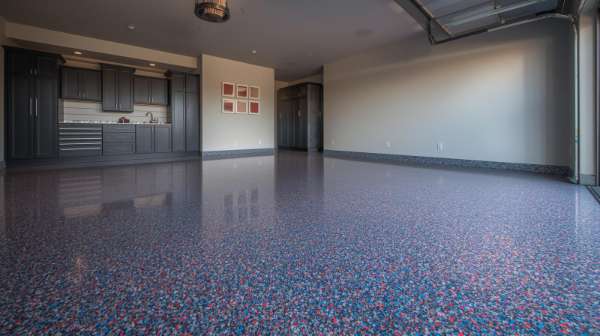
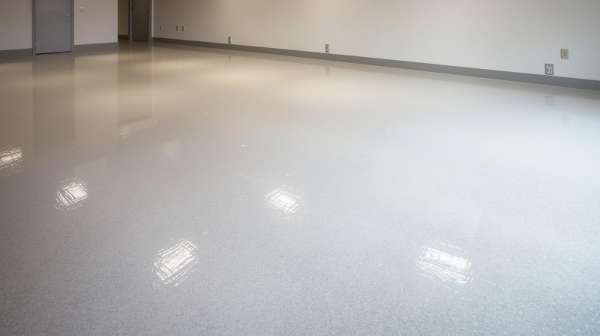
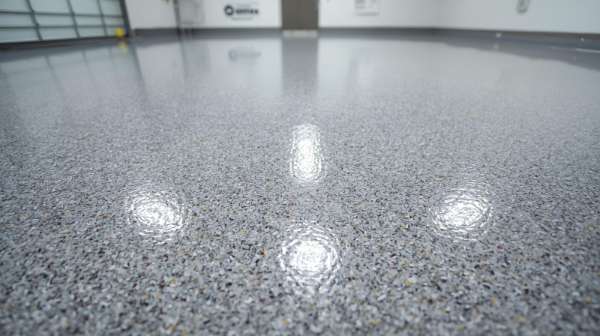
How does salt damage affect garage floors in Ontario? Road salt tracked in on tyres slowly breaks down bare concrete over repeated winters. GLI Epoxy Flooring inspects salt-damaged garage floors across the GTA and wider Ontario every spring. This guide covers professional garage floor protection across Ontario. It walks through the warning signs to watch for and how homeowners can clean, repair, and protect their floor.
What Causes Salt Damage on Ontario Garage Floors?
Concrete looks solid, but it is full of tiny pores. Road salt and melting snow form a salty brine on the garage floor. That brine seeps into those pores instead of staying on the surface.
Once inside the concrete, the salt reacts with calcium hydroxide. This creates calcium oxychloride crystals. These crystals expand and push the concrete apart from the inside.
This process happens slowly at first. Most homeowners do not notice it until visible damage shows up months or years later.
How Does Freeze-Thaw Make Salt Damage Worse in Ontario?
Ontario winters add a second layer of damage. Water trapped in concrete pores freezes overnight and expands by about nine per cent. That expansion puts pressure on the surrounding concrete.
GLI Epoxy Flooring sees this cycle repeat constantly during GTA winters. Temperatures often swing above and below freezing in a single day. Salt makes this worse. It lowers the freezing point and increases the number of freeze-thaw cycles a slab endures each season.
Each cycle creates tiny new fractures. Over several winters, these fractures connect and weaken the entire slab.
What Are the Warning Signs of Salt Damage on a Garage Floor?
Salt damage usually appears in stages. Catching it early makes repair much simpler and cheaper.
- White, powdery residue on the surface, known as efflorescence
- Small pits and craters near tyre paths
- Hairline cracks that widen each winter
- Flaking or spalling, where chunks of concrete break loose
- A rough, sandy texture where the top layer has eroded
Early signs like white residue and hairline cracks are easy to manage. Advanced signs like spalling and loose chunks usually mean professional repair is needed.
How Can Salt Stains Be Cleaned Off a Garage Floor?
Cleaning salt stains takes more than a quick rinse. High-pressure washing actually pushes salt deeper into the concrete, so it should be avoided.
GLI Epoxy Flooring recommends a simple vinegar and water solution for early-stage salt residue. This works well for homeowners across Markham, Vaughan, and Richmond Hill. Mix equal parts vinegar and warm water. Apply it to the stain and let it sit for a few minutes before scrubbing.
A wet vacuum works better than rinsing alone. Rinsing without vacuuming can push dissolved salt back into the pores instead of removing it.
Noticing white stains, pitting, or flaking on a garage floor? Call 289-236-8371 or reach out through our contact page for a free on-site assessment. This helps determine whether cleaning, repair, or a full coating is the right next step.
How Is Salt-Damaged Concrete Repaired?
Minor pitting and hairline cracks can often be patched. Polymer-modified cement patches bond better than standard cement and resist cracking.
Larger spalled areas need more attention. Crack repair for spalled concrete begins by removing loose material. The surface is then rebuilt with a bonding agent suited to the damage.
Epoxy mortar works well for heavier spalling. It bonds tightly and can be feathered into the surrounding concrete for a smooth result.
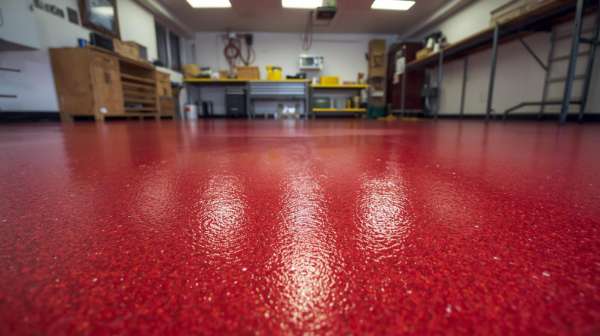
How Should a Salt-Damaged Floor Be Prepped Before Resealing?
Any salt-damaged floor needs proper prep before a new sealer or coating goes down. Trapped salt and moisture will cause a new coating to fail prematurely if they remain in the concrete.
Diamond grinding before resealing or recoating opens the surface pores. It also removes contaminated concrete. This step matters more for salt-damaged floors than for a typical new installation.
Skipping this step is the most common reason a new coating peels within a year or two. Grinding costs little compared to redoing an entire failed coating.
Which Protection Option Stops Salt Damage Best?
Several protection options exist once the concrete is clean and repaired. Each option blocks salt and moisture differently.
| Protection Option | How It Protects | Best For |
|---|---|---|
| Penetrating sealer | Repels water at the surface, stays porous | Budget protection, low traffic |
| Epoxy garage floor systems | Creates a sealed, non-porous barrier | Most Ontario garages |
| Polyaspartic coatings built for winter protection | Stays flexible through freeze-thaw swings | Heaviest winter use, fast turnaround |
Penetrating sealers offer the least protection and need frequent reapplication. Epoxy garage floor systems and polyaspartic coatings built for winter protection both create a true barrier. Salt brine cannot reach the concrete underneath either option.
Why Are Ontario Winters Especially Hard on Concrete?
Ontario’s climate is uniquely hard on unprotected concrete. Heavy snowfall means more road salt tracked into garages across the province.
Data on how much road salt Canada uses each winter shows the scale of the problem nationwide. Millions of tonnes go down on Canadian roads every year. Much of it ends up on garage floors through tyres and boots.
Combined with sharp daily temperature swings, this makes Ontario one of the toughest climates in the country for bare concrete.
How Should Ontario Homeowners Protect Their Garage Floor From Salt?
Salt damage builds slowly, then becomes expensive fast. Watching for early signs and cleaning promptly can prevent years of deterioration.
GLI Epoxy Flooring helps Ontario homeowners clean, repair, and protect garage floors before winter damage sets in. For a full look at protection pricing, see the full 2026 garage floor coating cost breakdown for Ontario.
Ready to stop salt damage before it spreads? Call GLI Epoxy Flooring at 289-236-8371 or contact us online for a free on-site inspection and coating recommendation.
Frequently Asked Questions
1. Why does my garage floor have white stains every winter?
White stains on a garage floor are usually efflorescence. This is a residue left behind when salty moisture evaporates from the concrete surface. Road salt tracked in on tyres seeps into the concrete’s pores during winter. As that moisture dries out over the following weeks, it leaves dissolved salts behind as a powdery white deposit. This is often one of the earliest visible signs of salt exposure. It usually appears before any structural damage like pitting or cracking shows up. The stains tend to return each winter if the underlying salt is never fully removed from the pores. Regular cleaning with a vinegar solution and wet vacuum extraction works well. Following it with a protective sealer or coating is the most reliable way to stop the staining. This keeps it from returning year after year.
2. Is salt damage on a garage floor a serious structural problem?
Salt damage becomes a real structural concern once it progresses to spalling. That is when chunks of the concrete surface break loose, or cracks widen past about a quarter inch. At the early stage, with just white residue or hairline cracking, the damage is mostly cosmetic. It is easy to manage with cleaning and a protective coating. Left untreated for several winters, repeated freeze-thaw cycling combined with salt exposure can weaken the slab. In severe cases, this can require full resurfacing or replacement. The key factor is how many winters the concrete has gone unprotected. A floor exposed to road salt for one or two seasons usually only needs cleaning and sealing. Five or more seasons of exposure often means patching or resurfacing before any coating goes down.
3. Can I stop salt damage without a full epoxy coating?
Penetrating sealers offer some protection without the cost of a full coating system. They provide less durability than epoxy or polyaspartic options, though. A silane or siloxane sealer repels water and salt brine at the surface. This reduces how much soaks into the concrete’s pores. These sealers typically need reapplication every one to three years. They wear down faster than a true coating under regular vehicle traffic. Diligent cleaning after every storm helps too. Containment mats that catch dripping slush before it reaches the concrete can also reduce salt exposure. For an Ontario garage used daily through winter, a true coating often pays for itself faster. It beats repeated sealer reapplications over the years.
4. How do I know if my garage floor needs repair or just cleaning?
A floor with only white residue and no visible pitting usually just needs a thorough cleaning. A protective sealer or coating afterwards is ideal. Once pitting, small craters, or hairline cracks appear, the floor likely needs patching before any coating is applied. Coating over damaged concrete traps the problem underneath. Spalling, where visible chunks of concrete have broken away, always requires repair first. This typically means a polymer-modified cement patch or an epoxy mortar for larger areas. A simple test is to run a hand or a screwdriver over the surface. Loose, hollow-sounding, or crumbling areas indicate damage that goes beyond the surface. That level of damage needs professional repair rather than a DIY cleaning solution.
5. Does pressure washing help remove road salt from a garage floor?
Pressure washing is not recommended for removing road salt from a garage floor. The high-pressure water actually drives salt crystals deeper into the concrete’s pores instead of removing them. This can make staining and future damage worse, even though the floor may look cleaner right after. A better method uses a mixed solution of vinegar and warm water. Apply it directly to the stained area. Let it sit for a few minutes before scrubbing with a stiff brush. The dissolved salt solution should then be removed with a wet vacuum rather than rinsed away. Rinsing alone can redeposit the salt back into the surface as it dries. This method takes more time than pressure washing but actually removes salt instead of just relocating it.
6. How long does it take for salt damage to seriously damage a garage floor in Ontario?
Visible salt damage can start appearing within a single winter on bare, unsealed concrete. Serious structural issues like spalling usually take three to five winters of repeated exposure to develop. The exact timeline depends on how much road salt gets tracked in and how often the floor is cleaned. Whether the concrete had any sealer or coating protection to begin with also matters. A garage used daily through an Ontario winter, without any cleaning or protection, sees faster deterioration. One used occasionally, or cleaned regularly after storms, holds up much longer. Homeowners who address early signs like efflorescence and hairline cracks promptly gain a real advantage. Doing so can often prevent the more serious spalling and structural damage from developing at all.