How much does garage floor coating cost in Ontario? Most homeowners pay between $1,200 and $9,750 for a professional job. The price depends on the garage size, coating type, and the current condition of the concrete. GLI Epoxy Flooring works with homeowners across the GTA and wider Ontario. This question comes up on nearly every call. This guide breaks down real 2026 prices for epoxy, polyaspartic, and polyurea coatings. It covers garage floor coating installers across the GTA and Ontario.
What Affects the Cost of Garage Floor Coating in Ontario?
Several factors decide the final price of a garage floor coating job. Concrete condition matters most. Cracks, oil stains, and moisture problems all add extra prep work.
Garage size also drives cost. Larger floors need more material and more labour hours. Coating type changes the price too, since epoxy costs less than polyaspartic or polyurea.
Access to the garage and removal of an old failed coating also shift the number. Homeowners should treat any quote under roughly $3 per square foot with caution. That price usually means thin material or no real grinding.
How Much Does Epoxy Garage Floor Coating Cost in Ontario?
Epoxy remains the most common garage floor coating in Ontario. Professional installation typically runs $5 to $9 per square foot in 2026. A standard 250 square foot single garage costs roughly $1,250 to $2,250. A 450 square foot double garage runs $2,250 to $4,050.
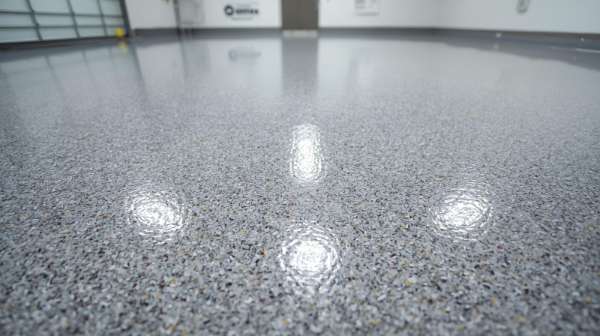
GLI Epoxy Flooring installs epoxy flake systems built for garage floors with full diamond-grind prep on every job. This keeps adhesion strong under daily vehicle traffic. Basic epoxy without flakes costs less, but most Ontario garages benefit from a flake system for slip resistance.
Homeowners comparing quotes should ask how many coats are included. A true two-coat epoxy system with a clear topcoat outlasts a single-coat job by several years.
How Much Does Polyaspartic Garage Floor Coating Cost in Ontario?
Polyaspartic coating costs more than epoxy, generally $6 to $12 per square foot in 2026. A single garage runs about $1,500 to $3,000. A double garage lands between $2,700 and $5,400. The higher price reflects faster curing, since most jobs finish in a single day.
Ontario’s freeze-thaw winters make polyaspartic garage floor coating a strong option. The material stays flexible instead of cracking when temperatures swing sharply. Homeowners who need their garage back fast, such as those without a second parking spot, often choose polyaspartic.
Polyaspartic also resists UV yellowing better than epoxy over time. Garages with large windows tend to show less discolouration after several years.
How Much Does Polyurea or Metallic Coating Cost for a Garage Floor?
Polyurea and metallic coatings sit at the top of the price range. Expect $8 to $15 per square foot in Ontario for 2026. A single garage costs roughly $2,000 to $3,750. A double garage runs $3,600 to $6,750.
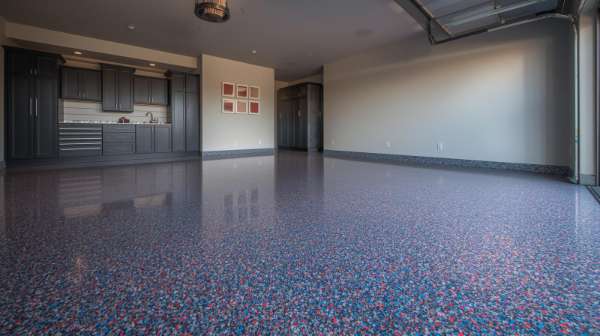
GLI Epoxy Flooring has installed metallic epoxy finishes in garages across Markham, Vaughan, and Richmond Hill. Demand for these higher-end finishes keeps growing alongside new home builds. Homeowners who want a show-floor look, not just protection, tend to land in this bracket.
Metallic systems also take longer to install correctly, often two full days instead of one. That extra labour time for pigment blending is a large part of the higher cost.
Not sure which coating fits your garage and budget? Call 289-236-8371 or reach out through our contact page for a free on-site quote. Diamond grinding and full concrete prep are included in every estimate across Ontario.
What Does Garage Floor Coating Cost by Garage Size in Ontario?
Garage size is one of the biggest cost drivers. Larger floors need more material and longer installation days. The table below shows typical 2026 pricing by coating type across common Ontario garage sizes.
| Garage Size | Epoxy Cost | Polyaspartic Cost | Polyurea/Metallic Cost |
|---|---|---|---|
| Single (250 sq ft) | $1,250–$2,250 | $1,500–$3,000 | $2,000–$3,750 |
| Double (450 sq ft) | $2,250–$4,050 | $2,700–$5,400 | $3,600–$6,750 |
| Triple (650 sq ft) | $3,250–$5,850 | $3,900–$7,800 | $5,200–$9,750 |
These figures assume standard concrete in fair condition. Extensive crack repair or removal of old coating can add several hundred dollars to any range shown here.
Why Does Skipping Proper Prep Cost More Later?
Skipping proper surface prep is the most expensive mistake in garage floor coating. Coating applied over unground concrete usually fails within one to three years. It peels, bubbles, or lifts at the edges.
Removing a failed coating and starting over typically costs 30 to 50 per cent more. Doing proper concrete grinding before coating the first time avoids this cost entirely. Diamond grinding opens the concrete pores for real adhesion.
Cheaper DIY kits that skip grinding often need a full redo within a few Ontario winters. One homeowner might spend $1,800 on a DIY kit that peels within two years. Redoing that same garage professionally then runs closer to $3,000.
Does Garage Coating Cost More in Some Ontario Regions Than Others?
Coating costs vary somewhat across Ontario. The difference comes mostly from travel distance and local labour rates, not the material itself. GTA pricing tends to sit at the lower end of the ranges above.
Homeowners running coating projects outside the GTA, like Barrie, Muskoka, or Cambridge, sometimes pay a modest travel premium. This is generally 5 to 10 per cent above GTA pricing. Rural garages may also need extra moisture testing first.
Older homes in smaller Ontario towns sometimes have rougher, more uneven concrete. That condition difference, not the region itself, usually pushes the price up.
Why Do Road Salt and Freeze-Thaw Cycles Raise Ontario Coating Costs?
Ontario’s climate is a real cost driver, not just a marketing point. Road salt tracked in on tyres releases chloride into unsealed concrete. This speeds up surface pitting and cracking over repeated winters.
Environment and Climate Change Canada’s code of practice on road salt management covers this issue. It outlines how much chloride enters the environment each winter. That volume helps explain why uncoated garage floors in Ontario deteriorate faster than those in milder climates. A quality coating acts as a barrier against this chloride exposure.
Freeze-thaw cycling adds a second layer of stress. Water seeps into hairline cracks and expands as it freezes. This widens cracks each winter until a proper coating seals the surface.
Epoxy vs Polyaspartic vs Polyurea: Which Coating Is Worth the Cost?
Each coating type suits a different priority. Some homeowners want the lowest budget option. Others want the fastest turnaround or the toughest finish. The table below summarises the trade-offs.
| Coating Type | Cost per Sq Ft | Cure Time | Best For |
|---|---|---|---|
| Epoxy | $5–$9 | 3–5 days | Budget-conscious homeowners, standard use |
| Polyaspartic | $6–$12 | 1 day | Fast turnaround, freeze-thaw flexibility |
| Polyurea/Metallic | $8–$15 | 1–2 days | High-end finish, heaviest traffic |
Homeowners who need the garage back fast often pick polyaspartic despite the higher cost. Those with a flexible timeline typically choose standard epoxy instead.
How Much Should Ontario Homeowners Budget for Garage Floor Coating?
Garage floor coating in Ontario typically costs between $1,200 and $9,750 in 2026. The exact number depends on garage size and coating type. Epoxy remains the most affordable starting point. Polyaspartic offers the fastest turnaround, and polyurea or metallic finishes deliver the highest-end look.
GLI Epoxy Flooring provides on-site quotes across the GTA and wider Ontario. Homeowners get an exact number instead of a rough estimate. For a deeper look at Toronto-specific pricing across garages, basements, and commercial spaces, see GLI’s full Toronto epoxy cost breakdown.
Ready for an accurate quote for your garage? Call GLI Epoxy Flooring at 289-236-8371 or contact us online. A full on-site assessment comes before any coating recommendation.
Frequently Asked Questions
1. Why does epoxy garage floor coating cost less than polyaspartic in Ontario?
Epoxy costs less mainly because it takes longer to cure, usually three to five days versus one day for polyaspartic. That longer cure window means less rushed labour and simpler application equipment, which keeps installer costs down. Epoxy also uses a resin formulation that has been standard in Ontario garages for over a decade. Supplier competition keeps material costs lower. Polyaspartic’s fast cure comes from a more advanced, temperature-stable resin. That resin also resists UV yellowing and stays flexible through freeze-thaw cycles, and both traits add to the price. Application crews also need extra training to work with polyaspartic’s short working window, which adds to labour cost. Homeowners on a tighter budget usually find epoxy the more affordable choice. This works well when the garage does not need to reopen in a single day. Either system, properly installed, still delivers a decade or more of daily use in an Ontario garage. It still offers real durability for a Canadian garage in 2026.
2. How much should a 400 to 450 square foot double garage floor coating cost in the GTA in 2026?
A double garage in that size range typically costs $2,250 to $4,050 for epoxy. Polyaspartic runs $2,700 to $5,400, and polyurea or metallic finishes run $3,600 to $6,750, based on current GTA pricing. The exact number within each range depends on concrete condition. Garages with existing cracks or moisture issues need extra grinding and repair first. Flake density and topcoat thickness also shift the price. Heavier flake coverage and a thicker clear coat push costs toward the higher end. Homeowners should request a written, itemised quote that separates material, labour, and prep costs. Bundled flat-rate quotes make it harder to compare installers fairly across the GTA. A clear quote should also state the number of coats, the topcoat type, and the warranty length in writing.
3. Does garage floor coating cost more in Ontario because of winter road salt?
Road salt does not add to the upfront installation cost. It does shorten the life of an uncoated or poorly coated garage floor, which raises long-term costs. Chloride from road salt penetrates unsealed concrete. It speeds up pitting and cracking over repeated winters, according to federal environmental guidance on road salt management. A quality coating creates a barrier against that chloride exposure. It protects the concrete underneath for 10 to 20 years with proper maintenance. Homeowners who skip coating, or choose a thin, low-cost option, take on more risk. Many face concrete repair within five to seven years because of salt damage. That repair work often includes crack filling and moisture testing. Some jobs need a full concrete resurface before any new coating goes down. Factor in that avoided repair cost. A proper coating is usually the cheaper option over the life of an Ontario garage floor.
4. Is it worth paying extra for polyaspartic coating instead of epoxy for an Ontario garage?
Polyaspartic is worth the extra cost for homeowners who need fast turnaround. Most jobs finish in one day instead of three to five days for epoxy. It also holds up slightly better through Ontario’s sharp winter temperature swings. Epoxy can become more brittle after many years of that exposure. Standard epoxy with flakes delivers similar day-to-day durability at a lower price. It suits homeowners with a second vehicle or flexible parking during installation. The decision often comes down to timeline and budget rather than raw performance. Both systems, properly installed, last well over a decade in an Ontario garage. Homeowners planning a move within a few years often lean toward epoxy. The lower cost suits a shorter ownership window.
5. How much extra does it cost to fix a garage floor coating that was installed without proper prep?
Removing a failed coating and reinstalling it correctly typically costs 30 to 50 per cent more. Removal adds labour hours before any new material goes down. A common pattern involves a homeowner spending around $1,800 on a DIY epoxy kit applied without diamond grinding. It then peels or bubbles within one to two years. Redoing that same garage professionally, including proper removal and grinding, often runs closer to $2,800 to $3,200. This is why most reputable Ontario installers include diamond grinding as a standard part of every quote. It prevents this exact costly redo scenario down the road. Homeowners should ask any installer directly whether grinding is included, rather than assuming it is part of every quoted price.
6. Do garage floor coating prices change much between Toronto and smaller Ontario cities like Barrie or Muskoka?
Prices shift only modestly between the GTA and smaller Ontario markets. Expect a 5 to 10 per cent premium for locations like Barrie, Muskoka, or Cambridge. This covers travel time and lower installer density in those areas. The coating materials themselves cost the same regardless of location. The difference comes almost entirely from labour and logistics, not product pricing. Rural and cottage-country garages sometimes need additional moisture testing before a firm quote. Older concrete slabs in these areas were not always poured to current standards. Homeowners in these markets should still expect to pay within the same general ranges outlined for GTA garages. A modest travel premium is the main adjustment. Getting quotes from at least two installers helps confirm whether a specific price reflects true regional variance or simple overcharging.