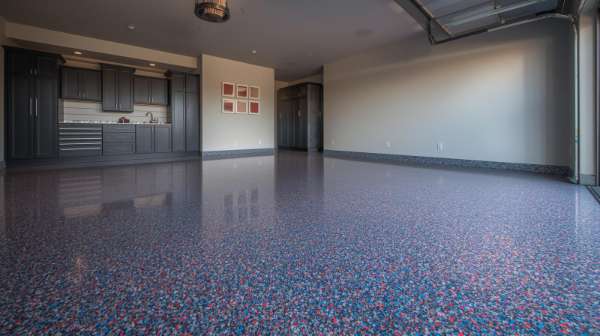
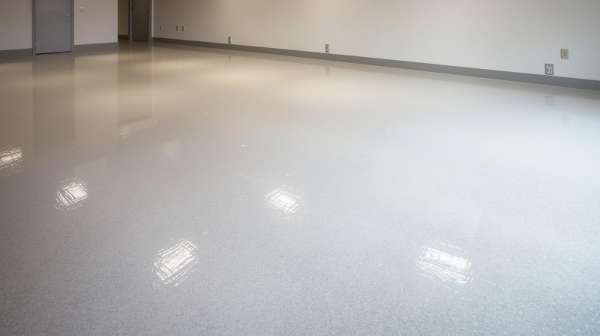
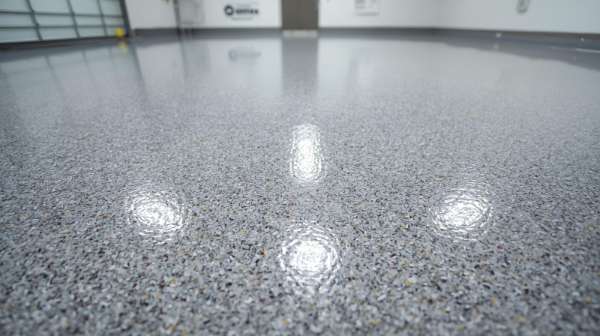
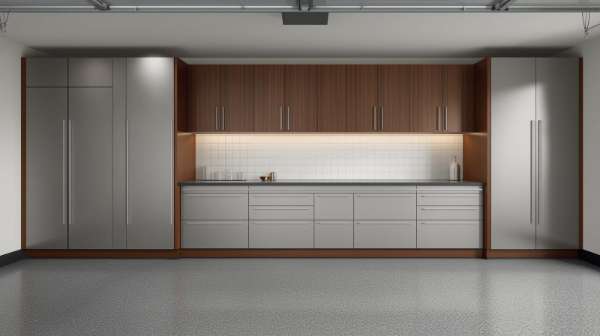
Toronto homeowners ask us this question more than any other: should I go with epoxy or polyaspartic for my garage floor? Both are real options. Both have their place. But they are not the same product, and the right choice depends on how you use your garage, what your slab looks like, and how long you want the floor to last.
At GLI Epoxy Flooring, our team installs both systems across Toronto, North York, Etobicoke, Vaughan, and the wider GTA. We have seen what works and what fails in Ontario garages through every season. This guide gives you a straight, honest look at epoxy vs polyaspartic in Toronto so you can make the right call for your space and your budget.

What Is Epoxy Flooring? A Quick Overview
Epoxy is a two-part coating made from resin and hardener. When mixed and applied to a prepared concrete slab, it bonds to the surface and cures into a hard, protective layer. It has been used on garage floors, warehouses, and commercial spaces for decades. Most people are familiar with it because it has been the standard option for a long time.
A professional epoxy system includes a primer coat that soaks into the concrete, a base coat with your chosen colour or flake finish, and a clear topcoat sealer on top. When done right with proper diamond grinding prep, epoxy holds up well to daily use. It resists oil spills, common chemicals, and foot traffic. The main drawbacks are its long cure time, its tendency to yellow under UV light, and its rigid nature, which can lead to cracking when concrete expands and contracts.
What Is Polyaspartic Coating? How It Differs
Polyaspartic is a more advanced coating in the polyurea family. It was first developed in the 1990s as a protective coating for steel bridges. Over time, it made its way into the flooring world and is now widely used in garages, commercial floors, and industrial spaces across Canada. The chemistry is more refined than epoxy, which gives it several performance advantages.
The biggest difference most homeowners notice right away is cure time. Polyaspartic cures within hours rather than days. Most systems are walk-on ready the same day and drive-on ready within 24 hours. It also stays clear over time and does not yellow when exposed to sunlight. It remains slightly flexible after curing, which means it moves with the concrete during Toronto’s freeze-thaw cycles instead of cracking. That flexibility is a major reason our crew at GLI Epoxy Flooring recommends polyaspartic for garages that deal with seasonal temperature swings.
Epoxy vs Polyaspartic Toronto: Side-by-Side Comparison
Here is a direct breakdown of how the two systems stack up for Toronto garage floors. The table covers the features that matter most to homeowners in Ontario: durability, cure time, UV performance, and cost.
| Feature | Epoxy | Polyaspartic |
|---|---|---|
| Cure Time | 3 to 7 days full cure | Same day, drive-on in 24 hrs |
| UV Resistance | Yellows in sunlight | 100% UV stable, no yellowing |
| Hot Tire Resistance | Can peel under hot tires | Bonds tightly, resists peeling |
| Flexibility | Rigid, can crack | Flexible, moves with concrete |
| Lifespan (residential) | 5 to 10 years | 15 to 20+ years |
| Cost (Toronto, per sq ft) | $5 to $10 | $6 to $12 |
| Toronto Winter Performance | Good with prep | Excellent – built for freeze-thaw |
| Best For | Budget-focused projects | Long-term garage investment |
Both systems deliver a major upgrade over bare concrete. The gap between them shows up most clearly over time. A properly installed epoxy floor looks great for the first few years. Polyaspartic tends to look the same on year ten as it did on day one, especially in garages with window exposure or bright doors that let sunlight hit the floor.
(289) 236-8371
How Toronto’s Climate Affects Your Choice
Toronto’s winters are hard on garage floors in ways that warmer climates never experience. Temperatures can swing from -20C in January to +30C in July. That range causes concrete slabs to expand and contract repeatedly. Road salt and snowmelt come in on tires and boots every single day from November through March. Hot tires from a car that has been running in summer heat sit on the same spot of floor day after day.
Epoxy handles that range reasonably well when installed with quality materials and proper prep. The problem is that it is rigid. Rigid coatings do not flex with the concrete, and that is where cracking and peeling start. Polyaspartic holds a slight flexibility after curing, which lets it move with the slab rather than fight it. Homeowners along the Hwy 401 corridor and across Etobicoke who have switched from epoxy to polyaspartic consistently tell us the new floor still looks sharp through multiple winters while the old epoxy had already started lifting at the edges.
Hot Tire Pickup: A Toronto-Specific Problem
Hot tire pickup happens when a warm car parks on a garage floor and the tires bond slightly to the surface. When the car drives away, the coating peels off in patches. Epoxy is more prone to this than polyaspartic. The stronger bond and added flexibility of polyaspartic resists tire adhesion much better. For homeowners in Toronto who park inside every day, this is one of the most practical reasons to choose polyaspartic over epoxy.
Our crew sees this issue regularly on older epoxy jobs we are called in to fix. The peeling typically starts near the front wheels where the engine heat sits longest. Polyaspartic does not eliminate the risk entirely, but its chemistry handles the stress far better than standard epoxy formulations.
Polyaspartic Garage Floor Coating Ontario: Pricing Guide
Cost is one of the most common factors in the decision between epoxy and polyaspartic. In Ontario, professionally installed epoxy typically runs $5 to $10 per square foot. Polyaspartic runs $6 to $12 per square foot. The gap is real but smaller than many homeowners expect, especially on a standard two-car garage.
Two-Car Garage (400 sq ft) Cost Estimate in Toronto
A standard two-car garage in Toronto covers roughly 400 square feet. At current Ontario rates:
Epoxy system: approximately $2,000 to $4,000 depending on finish type and floor condition.
Polyaspartic system: approximately $2,400 to $4,800 depending on design and prep required.
That difference of $400 to $800 on a full garage job is not nothing, but it is worth putting in context. Polyaspartic lasts 15 to 20 years in a residential garage. A quality epoxy floor typically lasts 5 to 10 years before it needs attention. Over 20 years, you may re-do an epoxy floor two or three times while the polyaspartic system is still going strong.
What Drives the Price Up in Ontario
The same factors that affect epoxy pricing also apply to polyaspartic. Concrete in poor shape with cracks, moisture issues, or old coatings that need grinding off will add $1 to $3 per square foot to either system. The finish type matters too. A solid-colour polyaspartic base runs cheaper than a full decorative flake broadcast with a clear topcoat. GLI Epoxy Flooring always gives a full written breakdown so you see exactly what you are paying for before we start.
Which Lasts Longer in a Toronto Garage?
This is where polyaspartic separates itself most clearly. A quality epoxy floor installed by a skilled crew with proper diamond grinding prep will last 5 to 10 years in a residential garage in Toronto. A properly installed polyaspartic system regularly lasts 15 to 20 years or longer, even with daily use and full exposure to Ontario winters.
The lifespan gap comes down to a few things. Polyaspartic is more flexible, so it handles the concrete movement from freeze-thaw cycles without cracking. Its UV resistance means it does not fade, yellow, or lose its finish in garages with natural light. Its tighter bond to the slab and higher abrasion resistance means it holds up better under daily tire traffic, salt, and cleaning. On pure longevity, polyaspartic wins for Toronto garages with no close competition.
Maintenance Over Time
Both systems are easy to maintain on a day-to-day basis. A sweep and a mop with a neutral cleaner is all either floor needs regularly. The real difference comes in long-term upkeep. Epoxy may need a topcoat refresh or spot repair after several years. Polyaspartic typically needs nothing beyond routine cleaning for its full lifespan. For busy homeowners who want a floor they can forget about, that matters.
Best Garage Floor Coating Canada: What the Pros Choose
Across Canada, professional installers and industry specialists increasingly favour polyaspartic systems for residential garages, particularly in provinces with harsh winters. Ontario, Quebec, and the Prairie provinces all experience the kind of freeze-thaw cycling that makes coating flexibility essential. Polyaspartic was built for exactly this kind of environment.
When installers and flooring professionals across Canada are asked what they would put in their own garages, the answer is almost always a polyurea base coat with a polyaspartic topcoat. That combination gives you the adhesion strength of polyurea on the bottom and the UV stability, scratch resistance, and fast cure of polyaspartic on top. It is the system our team at GLI Epoxy Flooring recommends most often for Toronto homeowners who want the best possible result and do not want to redo the floor for 15 to 20 years.
Hybrid Systems: Getting the Best of Both
Many professional installers now use a hybrid approach: an epoxy or polyurea primer and base coat followed by a polyaspartic topcoat. The epoxy or polyurea base bonds deeply to the concrete and gives great depth for decorative flake finishes. The polyaspartic topcoat provides UV stability, scratch resistance, and a high-gloss seal. This hybrid system captures the visual richness of epoxy with the long-term performance of polyaspartic.
GLI Epoxy Flooring offers this hybrid approach as part of our standard installation on garage projects across the GTA. The base and topcoat work together as a system, not as two separate products slapped on at different times. That matters because how the layers interact under heat, cold, and load is what determines whether the floor holds up for five years or twenty.
(289) 236-8371
When Epoxy Still Makes Sense for Toronto Homeowners
Polyaspartic is the better long-term coating for most Toronto garages, but epoxy is not a bad product. There are situations where it makes sense and delivers real value. Budget is the most straightforward one. For homeowners who need a clean, protected floor but have a tight budget and cannot stretch to polyaspartic pricing, a quality epoxy system done right is still a major step up from bare concrete.
Epoxy also works well in basement spaces that see minimal vehicle traffic and have no direct sunlight. Below-grade rooms without windows do not expose the coating to UV degradation, which removes one of epoxy’s main weaknesses. For storage areas, workshops, and utility spaces where the floor will not see hot tires or direct sun, a solid epoxy system can be an excellent and cost-effective choice.
Interior Spaces Without Sun Exposure
Laundry rooms, utility rooms, and basement workshops along the Allen Expressway corridor and across North York are spaces where our crew regularly installs epoxy with strong results. No UV means no yellowing. Light foot traffic means minimal wear. In those settings, the price difference between epoxy and polyaspartic is harder to justify, and a solid epoxy system gives the homeowner a clean, durable floor that serves them well for years.
The key in any setting is still proper prep. Diamond grinding, moisture testing, and crack repair are not optional steps that get skipped on epoxy jobs just because the product costs less. A cheap epoxy install with poor prep will fail faster than a properly installed polyaspartic. The prep is 70 percent of the result, no matter which coating goes on top.
What to Expect During Installation
Whether you choose epoxy or polyaspartic, the installation process at GLI Epoxy Flooring starts the same way: a full slab inspection. We check for moisture, cracks, existing coatings, and levelness before we quote a single number. Everything we find is included in the written estimate you receive.
Epoxy Installation Timeline
A standard epoxy garage floor takes one to two days of active work, then three to seven days of curing before you can bring vehicles back in. Day one covers the diamond grinding and any crack repair. Day two is the primer, base coat, and topcoat application. After that, the floor needs time to cure fully before it can handle the weight and heat of a car. Our crew will walk you through the exact timeline for your specific project before the job starts.
Polyaspartic Installation Timeline
Polyaspartic cures much faster. Most jobs are fully installed in a single day. The coating is typically walk-on ready the same evening and drive-on ready within 24 hours. That speed is a genuine advantage for homeowners who need their garage back quickly. It also means the installation window is shorter, which is why polyaspartic requires experienced installers who know how to apply the product at the right pace before it sets.
Our team at GLI Epoxy Flooring has installed hundreds of polyaspartic floors across the GTA. We coordinate every job around your schedule so disruption is minimal, whether you are using the garage daily or just need it done before winter sets in. Vince handles every quote and every walkthrough personally, so you always know who to call.
The Bottom Line: Epoxy vs Polyaspartic for Toronto Garages
Both coatings do the job. Both are a massive step up from bare concrete. The difference comes down to how long you want the floor to last and how much Toronto weather you want it to handle without showing its age. Polyaspartic wins on longevity, UV resistance, hot tire performance, and freeze-thaw durability. Epoxy wins on upfront cost and works well in interior spaces without sun exposure.
At GLI Epoxy Flooring, we install both systems and we tell every client the same thing Vince tells homeowners in person: pick the one that fits your budget and your garage. We will be honest with you about which one makes more sense for your specific floor. That is why GTA homeowners and commercial clients have been calling us since we opened in 2019. Call us for a free on-site visit and a written quote with no pressure and no obligation.
Frequently Asked Questions
Is polyaspartic better than epoxy for a Toronto garage?
For most Toronto garages, yes. Polyaspartic holds up better through freeze-thaw cycles, resists hot tire pickup, does not yellow in sunlight, and lasts 15 to 20 years compared to 5 to 10 years for epoxy. The upfront cost is slightly higher, but the long-term value is stronger in most cases.
How much more does polyaspartic cost compared to epoxy in Ontario?
In Ontario, the gap is roughly $1 to $2 per square foot. Epoxy runs $5 to $10 per square foot professionally installed in the Toronto market. Polyaspartic runs $6 to $12 per square foot. On a standard two-car garage of 400 square feet, the difference is typically $400 to $800 total.
Can you apply polyaspartic over existing epoxy in Toronto?
It depends on the condition of the existing epoxy. A well-bonded, intact epoxy floor can sometimes accept a polyaspartic topcoat after proper prep and scuffing. Peeling, bubbling, or delaminated epoxy must be fully removed first. Our team at GLI Epoxy Flooring assesses the existing floor during the quote visit and advises you honestly on whether a topcoat is viable or whether the full floor needs to come off.
Does polyaspartic work in cold Ontario weather?
Yes. One of polyaspartic’s strengths is that it can be applied across a wider temperature range than epoxy. It also handles the expansion and contraction of concrete slabs during Toronto winters better than rigid epoxy because it stays slightly flexible after curing. This makes it one of the best choices for Ontario garages specifically.
How long does a polyaspartic floor last in a Toronto garage?
When installed correctly with full diamond grinding prep and quality materials, a polyaspartic garage floor in Toronto typically lasts 15 to 20 years in residential use. Routine cleaning and prompt care of any surface scratches will help it reach the upper end of that range. GLI Epoxy Flooring uses professional-grade systems built for Canadian climate conditions.
What is the best garage floor coating in Canada for all seasons?
Most flooring professionals across Canada point to a polyurea base coat with a polyaspartic topcoat as the top-performing system for residential garages. It handles UV exposure, freeze-thaw cycles, road salt, and hot tire traffic better than any other readily available system. It is the combination our crew recommends most often for Toronto homeowners who want a floor they will not have to replace for 15 to 20 years.
Does GLI Epoxy Flooring install polyaspartic floors?
Yes. GLI Epoxy Flooring installs both epoxy and polyaspartic systems for garages, basements, and commercial spaces across Toronto and the GTA. We offer free on-site quotes and walk every client through both options so you can make an informed choice.