Choosing the right epoxy flooring system for a Toronto or GTA property comes down to three variables most property owners overlook: the condition of the concrete, the demands the floor will face, and the climate conditions the coating must survive.
GLI Epoxy Flooring assesses all three before recommending a system. The wrong coating for a garage, basement floor in Toronto, or commercial space fails not from poor product quality but from a mismatch between system and environment.
Why System Selection Matters More Than Product Choice
The most common misconception in epoxy flooring is that a higher-grade product solves every problem. Product quality accounts for less than half of a floor’s performance. The larger variables are the match between system and slab, and the match between system and space.
An epoxy coating applied over a damp Toronto basement slab will delaminate regardless of its price. A decorative metallic finish installed in a commercial warehouse will show wear within a year because it was not designed for vehicle traffic. A polyaspartic topcoat applied over a surface that was acid-etched rather than mechanically ground will lose adhesion at the bond line within one freeze-thaw season.
System selection asks three questions before any product is specified. What is the slab doing below the surface? What load and chemical exposure will the floor face? What seasonal conditions must the coating survive? Answering those three questions correctly narrows the right system down quickly.
How to Read Your Concrete Before Choosing Any Epoxy System
Every system specification begins with the concrete. Three measurements set which systems are viable before any finish or colour is discussed.
Moisture vapour emission rate (MVER) measures how much moisture moves upward through the slab over time. Toronto basements and ground-floor garages face groundwater pressure and humidity swings. These forces drive moisture vapour through even a well-poured slab. Most epoxy systems require an MVER below 24 g/m² per day. A reading above that threshold requires a moisture barrier primer at minimum. Severely affected slabs need a full vapour mitigation system. Skipping this measurement causes bubbling and peeling within months of install.
Concrete surface profile (CSP) describes the roughness of the prepared surface. Each system needs a specific CSP range for mechanical adhesion. Thin-film decorative systems often need CSP 2 to 3. Heavy-build industrial systems require CSP 4 to 6. The preparation method sets which profile is achieved.
Existing damage must be quantified before system selection. Active cracks, peeling, and oil or road salt damage all change which system is viable. Each also sets what repair work must come before coating. A system applied over unresolved damage inherits every movement, moisture, and adhesion problem the concrete carries.
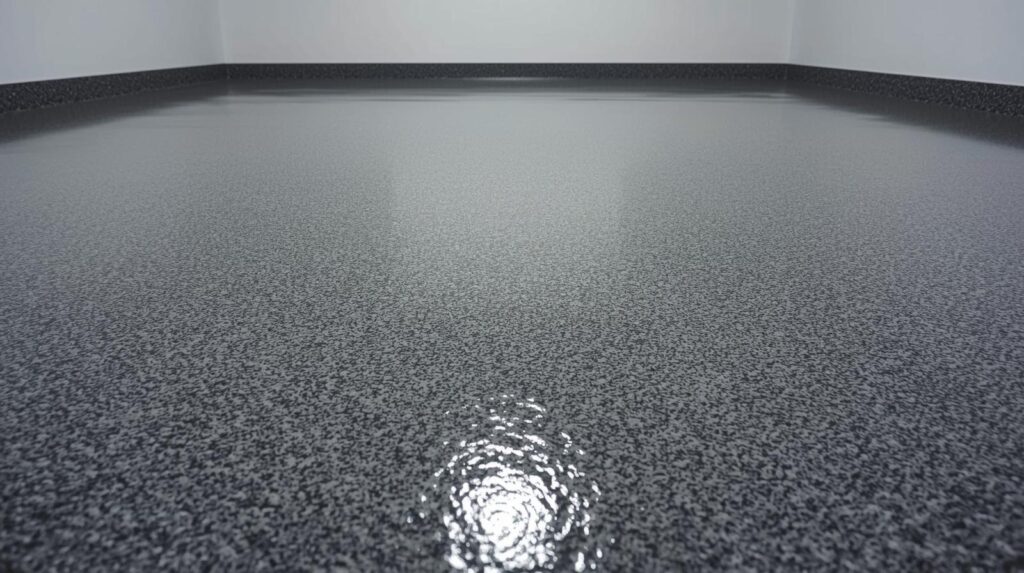
The Five Epoxy Flooring Systems GLI Installs in the GTA
GLI Epoxy Flooring installs five principal system types across residential, commercial, and industrial properties in Toronto and the GTA. Each is matched to a specific set of performance needs, traffic load, and aesthetic demands.
| System | Appearance | Best For | Toronto Climate Note |
|---|---|---|---|
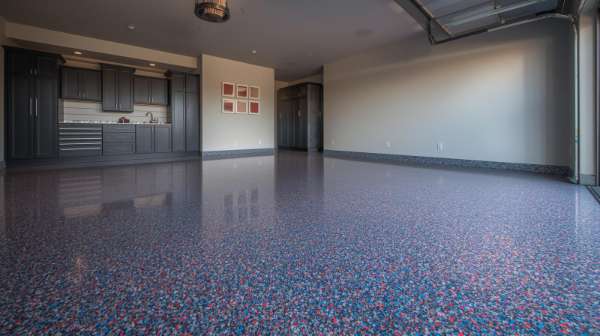
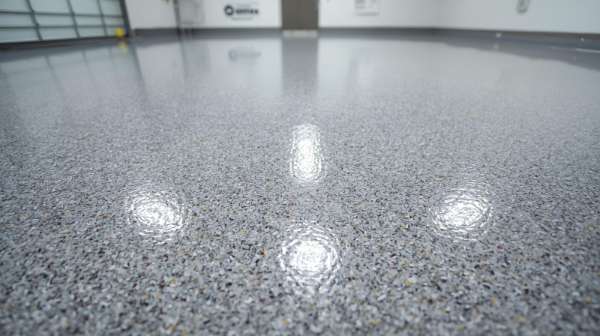
| Epoxy Flake | Chip broadcast over base coat, textured finish | Garages, light commercial, recreation | Polyaspartic topcoat required for freeze-thaw zones |
| Metallic Epoxy | High-gloss, three-dimensional, marbled effect | Finished basements, showrooms, retail | Moisture barrier primer essential in basements |
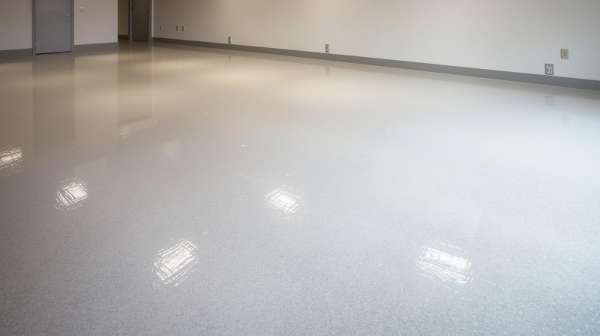
| Epoxy Quartz | Quartz aggregate broadcast, matte or satin finish | Commercial kitchens, locker rooms, clinics | High slip resistance, easy decontamination |
| Opaque High-Build | Solid colour, seamless, smooth or textured | Warehouses, industrial floors, workshops | 100% solids epoxy with urethane topcoat for abrasion |
| Polyaspartic System | Clear or pigmented, fast-cure | Any application requiring fast return to service | Retains flexibility at -30°C, preferred for exterior-adjacent surfaces |
Beyond these five, GLI also installs specialty systems. These include parking garage membranes for multi-level and underground structures, ESD systems for electronics and data centres, and hangar coatings for aviation maintenance sites.
Which System Works Best for Residential Garages and Basements in Toronto
Residential garage floors face a specific set of demands in the GTA. Hot rubber tyre marks from summer and road salt from November through March stress the concrete. Up to 80 freeze-thaw cycles annually put additional pressure on any coating above. The system must address all three.
For most GTA garages, an epoxy flake system with a polyaspartic topcoat is the practical choice. The broadcast flake layer adds texture and slip resistance. The polyaspartic topcoat resists salt penetration, cures in hours rather than days, and retains flexibility through Toronto’s full climate range. This system performs consistently across North York, Scarborough, Etobicoke, and Mississauga properties where winter road salt contact is unavoidable.
Basement floors in Toronto call for a different starting point. Moisture vapour emission rates in below-grade slabs are often higher than in garages. Spring is the critical period, when the ground thaws and groundwater rises. The system must include a moisture-safe primer or, on high-MVER slabs, a full vapour barrier base coat. For finished basement spaces where appearance matters, metallic epoxy flooring delivers a high-gloss, three-dimensional surface. It conceals minor substrate irregularities while remaining waterproof and easy to maintain. For utility basement applications, a pigmented high-build epoxy with a urethane topcoat provides durability at a lower cost.
Which System Works Best for Commercial and Industrial Properties in the GTA
Commercial and industrial floors face demands that residential systems cannot handle. Traffic loads, chemical exposure, cleaning frequency, and compliance needs all raise the specification. GLI Epoxy Flooring breaks these into three performance tiers.
Light commercial covers retail showrooms, offices, medical clinics, and food preparation areas. These spaces need chemical resistance and ease of maintenance more than impact resistance. A quartz broadcast system or a self-leveling epoxy with a polyaspartic topcoat meets both needs. Slip-resistant aggregates can be added to satisfy Ontario workplace safety regulations in areas exposed to liquids. Commercial epoxy flooring in Toronto for light commercial applications is often a two-day process from surface prep to final topcoat.
Medium commercial covers auto service centres, warehouses, food processing plants, and workshops. These require wear resistance, chemical resistance, and the ability to handle wheeled traffic and pallet jacks. A high-build 100% solid epoxy with a urethane or polyaspartic topcoat is standard. Total film build is often 3 to 4 mm.
Heavy industry covers plants, logistics centres, and chemical processing spaces. These require a minimum 5 mm build and enhanced chemical resistance. Novolac epoxy systems carry the highest chemical and heat resistance in the standard epoxy range. Use them where acids, solvents, or high-heat processes contact the floor.
How Toronto’s Climate Affects Which Epoxy System Holds Up Longest
No competitor blog on this topic addresses what Toronto’s climate specifically demands from a floor coating. Three climate factors change system selection in the GTA.
Freeze-thaw cycling generates expansion and contraction forces across the slab and any coating bonded to it. Toronto averages 50 to 80 freeze-thaw cycles per year. A brittle 100% solids epoxy at low film build loses adhesion at the bond line when the slab shifts. Polyaspartic topcoats are preferred for garage floors and exterior-adjacent surfaces. They remain flexible at -30°C rather than becoming rigid and prone to cracking.
Seasonal moisture vapour pressure rises in April and May as frozen ground thaws and groundwater rises toward grade. Properties near the water table show elevated MVER readings during this period. Coatings installed in spring without moisture testing frequently fail by mid-summer. Late summer and early autumn are the safest install windows in the GTA. Groundwater levels are lowest then and slab moisture has settled.
Road salt buildup on slabs that have been exposed without sealing for several years presents a specific adhesion problem. Calcium chloride and sodium chloride penetrate unsealed concrete and reduce surface porosity over time. Any system installed over a salt-contaminated slab must include a cleaning step before grinding. Salt residue reduces the keying that ground concrete relies on for epoxy adhesion.
Why Surface Preparation Determines How Long Any System Lasts
Surface preparation is not a setup step in epoxy work. It is the factor that sets whether any system adheres correctly.
Diamond grinding opens the pore structure of the concrete and creates the surface profile that adhesion requires. It removes laitance, the weak powdery layer of fine cement that rises during curing and fractures under coating stress. For home garages and light commercial floors, diamond grinding to CSP 2 to 3 is often enough.
Concrete shot blasting is used for larger commercial and industrial floors, parking structures, and heavily contaminated surfaces. Shot blasting propels steel shot against the concrete at high velocity. It achieves CSP 4 to 8 and removes what grinding alone cannot reach. It is faster per square metre on large commercial areas and produces a consistent profile across the full surface.
Both methods are correct in the right context. The method chosen must match the system’s adhesion needs and the condition of the slab. No coating product overcomes poor surface prep. The most common cause of early epoxy failure across GTA commercial properties is a prep method too light for the system applied above it.
What Canadian Workplace Safety Standards Say About Industrial Floor Coatings
Ontario’s Occupational Health and Safety Act requires employers to keep floors safe for the work done on them. For commercial and industrial sites, this means meeting set standards for slip resistance, containment, and long-term upkeep.
The Canadian Centre for Occupational Health and Safety publishes guidance on slip and fall prevention in workplaces. Their guidelines cover required friction levels, the role of anti-slip grit in floor coatings, and how to preserve those properties over time. CCOHS: Slips, Trips and Falls Prevention sets out the principles that apply to any Ontario commercial or industrial floor.
For GTA property owners, the floor system must meet the friction level required for the space and traffic it serves. The topcoat must hold that level through cleaning, chemical contact, and daily use over the service life.
VERIFY BEFORE PUBLISHING: link confirmed live 2026-06-26 — https://www.ccohs.ca/oshanswers/safety_haz/falls.html
Conclusion
The right epoxy flooring system for a Toronto property comes from three inputs: concrete condition, space demands, and climate survival. Each input narrows the options. Together, they point to the system that holds and rule out those that will not.
The assessment comes first. GLI Epoxy Flooring measures MVER, evaluates existing damage, and sets the required surface profile before any system is specified. The article on signs your concrete floor needs repair before epoxy installation covers the seven concrete conditions that change system specs. It details what must be resolved before any coating is applied.
Frequently Asked Questions
1. What is the most durable epoxy flooring system for a Toronto garage exposed to road salt and freeze-thaw cycles?
A polyaspartic topcoat over an epoxy flake base is most durable for Toronto garages. Polyaspartic stays flexible at -30°C, cures fast, and resists salt penetration. The flake layer adds slip resistance and hides surface imperfections from seasonal concrete movement through 50 to 80 annual freeze-thaw cycles.
2. What moisture vapour emission rate is acceptable before epoxy flooring is installed on a Toronto basement slab?
Most epoxy systems require moisture vapour emission below 24 g/m² per day. Toronto basement slabs frequently exceed this in spring as ground thaws. A moisture barrier primer resolves readings up to around 35 g/m² per day. Higher readings require a dedicated vapour mitigation system before any topcoat is applied.
3. What is the difference between an epoxy flake system and an epoxy quartz system for a commercial floor?
Epoxy flake systems use vinyl chip broadcast for texture and decoration, common in garages and light commercial spaces. Quartz uses angular aggregate for higher slip and abrasion resistance. Quartz is standard for commercial kitchens, clinics, and locker rooms requiring chemical resistance and easy decontamination.
4. How does Toronto’s freeze-thaw climate affect which epoxy topcoat should be used on a garage floor?
Standard epoxy becomes brittle at low temperatures and can lose adhesion during freeze-thaw cycling. Polyaspartic retains flexibility at -30°C and is preferred for Toronto garage floors. It cures in two to four hours, reducing the installation window challenge during shoulder-season months when temperatures swing.
5. What surface preparation method is needed before installing a high-build industrial epoxy system on a GTA warehouse floor?
Industrial high-build systems require CSP 4 to 6 for adhesion. Shot blasting is standard for Toronto warehouse floors. It removes surface scale and contamination while achieving the required surface profile. Diamond grinding alone is insufficient and produces bond failure under heavy industrial traffic.
6. How long does a professionally installed epoxy flooring system last in a Toronto commercial property?
A properly installed epoxy system lasts 10 to 20 years in Toronto commercial environments with routine maintenance. Garage floor polyaspartic systems typically last 10 to 15 years. Industrial high-build systems last 15 to 20 years. Lifespan shortens significantly when the system is mismatched to the space.