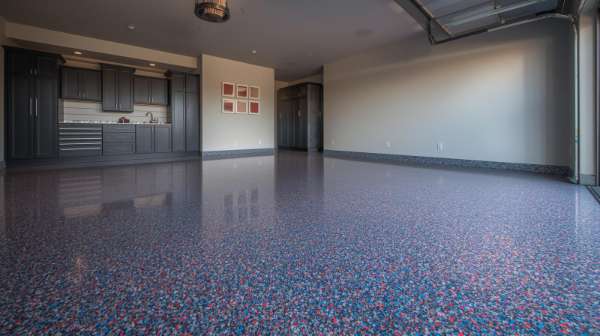
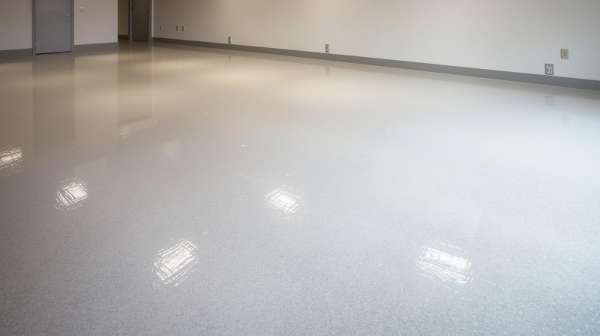
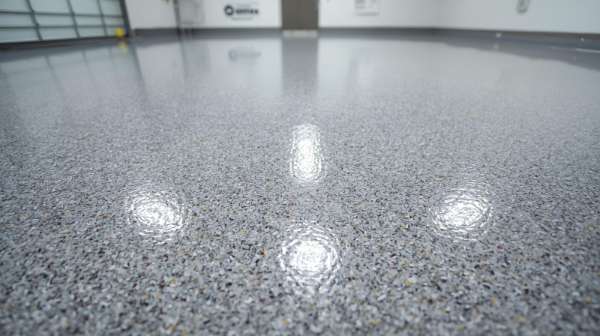
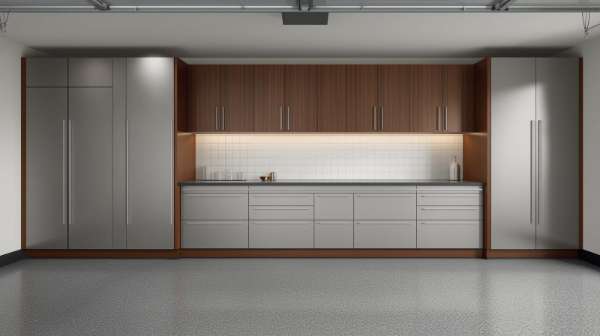
Toronto property owners weighing polished concrete vs epoxy flooring face a real decision with long-term cost implications. Both options deliver durable, modern finishes for garages, basements, retail floors, showrooms, and warehouses. Both also have specific strengths that change the answer for each space.
This guide compares polished concrete vs epoxy flooring in Toronto with real costs, lifespan numbers, and best-fit use cases. Begin with epoxy flooring services in Toronto to see installed examples. The team at GLI Epoxy Flooring installs both systems across the GTA and walks clients through the trade-offs daily.
How Polished Concrete and Epoxy Floors Are Built
Polished concrete is not a coating. The existing concrete slab is ground with progressively finer diamond abrasives until it reaches a sheen, then densified and sealed. The finish lives in the slab itself, not on top of it.
Epoxy flooring is a multi-coat resin system. After diamond grinding or shot blasting, installers apply a primer, a base epoxy coat, optional decorative flake or quartz, and a clear topcoat such as polyaspartic or polyurethane. The finished system sits on top of the slab at roughly 30 to 60 mils thick.
Both systems rely on serious slab preparation. The difference shows up in look, repairability, slip resistance, and how the floor responds over years of traffic.
Why Toronto Building Owners Compare These Two
GLI Epoxy Flooring fields the same question from Toronto clients every week: should the new floor be polished concrete or epoxy? Owners want a clean, low-maintenance surface that holds up to forklifts, foot traffic, vehicle weight, or retail customers.
Both options check those boxes on paper. The right call depends on the building, the budget, and how the room will be used. Polished concrete leans industrial and minimal. Epoxy opens design flexibility with colour, flake, and metallic effects.
Property owners across King West, Liberty Village, and the Junction commercial corridors usually decide based on aesthetic and downtime. Industrial owners near Vaughan, Brampton, and Concord decide based on chemical resistance and traffic load.
Polished Concrete Strengths and Weaknesses
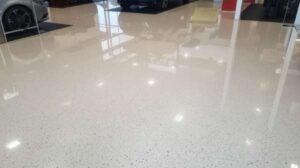
Polished concrete delivers a 20-year-plus floor with minimal upkeep. The finish reflects light, which can lower lighting costs in warehouses and showrooms. The look is permanent and built into the slab, so it cannot peel or delaminate.
Maintenance stays straightforward: dust mop daily, damp mop weekly, and re-burnish or reseal every 2 to 5 years. No recoating cycle. No major resin reapplication needed at any point.
The weaknesses are real. Polished concrete is vulnerable to acidic spills, oily contamination, and impact damage. Repairs are visible because patches do not match the polished sheen. The finish also depends entirely on the underlying slab quality.
Epoxy Flooring Strengths and Weaknesses
Epoxy delivers a fully sealed, non-porous finish with strong chemical and stain resistance. The customisation range is wide: solid colour, decorative flake, metallic, terrazzo-style, and quartz broadcast finishes are all available. Slip-resistant additives integrate during the topcoat phase.
Lifespan runs 10 to 20 years depending on system thickness and traffic load. Heavy-duty industrial systems with urethane topcoats can match polished concrete in lower-traffic settings. Most GLI Epoxy Flooring installs across Toronto include a polyaspartic topcoat that handles UV exposure without yellowing.
The weaknesses include topcoat wear over 7 to 10 years and a vulnerability to direct UV in fully sun-exposed areas without the right topcoat chemistry. Repairs are easier than polished concrete though, since damaged sections can be ground and recoated to blend with the original. See epoxy garage floor examples for typical finishes.
Direct Comparison Table
The table below puts both systems side by side on the dimensions that drive Toronto buying decisions.
| Criterion | Polished Concrete | Epoxy Flooring |
|---|---|---|
| Cost installed (Toronto, 2026) | $4 to $12 per sqft | $7 to $14 per sqft |
| Typical lifespan | 20+ years | 10 to 20 years |
| Customisation | Limited (grey, dye options) | Wide (colour, flake, metallic) |
| Chemical resistance | Moderate | High |
| Light reflectivity | Excellent | Good |
| Repair difficulty | Hard (visible patches) | Easier (blend-in recoats) |
Toronto pricing assumes a slab in average condition. Older slabs in Junction Triangle or Leslieville often need surface repair first, which can add $1 to $3 per square foot to either option.
Cost in Toronto for 2026
Polished concrete in Toronto typically costs $4 to $12 per square foot installed. Pricing depends on the polish level (cream, salt-and-pepper, or aggregate exposure) and slab condition. Older slabs in industrial buildings often need surface repair first.
Epoxy systems in Toronto run $7 to $14 per square foot for a multi-coat residential or light commercial build. Heavy-duty industrial epoxy with urethane topcoats reaches $14 to $22 per square foot. Both prices include slab prep, application, and a curing window before reopening.
For a 2,000 square foot Toronto warehouse, polished concrete typically lands at $10,000 to $20,000 installed. Epoxy runs $14,000 to $28,000 for the same space. Long-term, polished concrete recoups its cost through lower maintenance expenses over the first decade.
Comparing polished concrete and epoxy for a Toronto warehouse, showroom, garage, or basement? Call 416-899-2141 for a free site assessment, slab evaluation, and clear pricing across Toronto, Mississauga, Vaughan, Markham, and Hamilton. Contact the team online for a fast turnaround.
Best Choice by Space
Warehouses, distribution centres, and large industrial floors near the 401 and Highway 7 corridors usually favour polished concrete. Light reflection, hardness, and minimal maintenance cycles fit forklift-heavy operations well.
Showrooms, retail floors, restaurants, and breweries lean toward epoxy. Customisation, slip-resistant additives, and food-safe coatings fit customer-facing environments better than the industrial look of polished concrete. Hybrid systems exist for spaces between the two extremes. Commercial warehouse system coatings cover that middle ground for many clients.
Residential garages and basements almost always go epoxy in Toronto. The colour range, flake options, and chemical resistance suit home use better than a cold industrial look.
Downtime and Business Impact for Toronto Operations
Floor replacement in an operating Toronto business is rarely just a flooring decision. The system that installs faster, cures faster, and reopens the space faster saves real money for retail, warehouse, and food service operators.
Polished concrete in a 2,000 square foot Toronto space typically takes 3 to 5 working days for full polish, densification, and seal. The space stays unusable through grinding and densifier cure, which adds up to lost retail days or paused production. Epoxy with a polyaspartic topcoat finishes in 2 to 4 days and can return to light traffic in as little as 24 hours after the final coat.
Toronto operators in food service, automotive, and logistics often schedule installs over a long weekend or holiday period. Epoxy’s faster reopen window suits short shutdowns better. Polished concrete works well when the project lines up with a longer renovation phase or a phased move-in.
Maintenance and Long-Term Cost Over Ten Years
Polished concrete demands roughly 1 to 2 percent of the initial install cost per year in maintenance. A $15,000 polished floor costs about $1,500 to $3,000 to maintain over a decade. Maintenance covers burnishing, redensifying, and resealing on a 2 to 5 year cycle, aligned with ASCC polishing standards that Toronto specifiers reference.
Epoxy maintenance runs slightly higher because of topcoat refresh cycles. A $15,000 epoxy floor typically costs $3,000 to $5,000 over ten years. That includes a single topcoat reapplication around year 7 to 10. Heavy traffic shortens that window further.
Both systems beat tile, vinyl, and untreated concrete over a ten-year horizon. The Toronto choice usually comes down to use case and aesthetic rather than lifetime cost alone.
Final Word for Toronto Buyers
Polished concrete and epoxy flooring both deliver decades of service when installed correctly. Polished concrete wins on minimal maintenance, light reflection, and lifespan. Epoxy wins on customisation, chemical resistance, slip safety, and easier repairs. Match the finish to the building, the traffic, and the brand aesthetic for the best long-term result.
GLI Epoxy Flooring installs both systems across Toronto, Mississauga, Vaughan, and the broader GTA. The team walks every client through the trade-offs before any work begins. Owners who want to see real installs first can browse the completed Toronto project gallery for finished work across the GTA.
Get a free on-site consultation, upfront pricing, and a custom finish recommendation designed for your Toronto property by calling GLI Epoxy Flooring at 416-899-2141 or reaching out online. Since 2019, the company has installed epoxy flooring and concrete prep systems across the GTA with fully licensed and insured service.
Frequently Asked Questions
Is polished concrete cheaper than epoxy in Toronto?
Polished concrete typically costs $4 to $12 per square foot installed in Toronto, while epoxy ranges from $7 to $14 per square foot. Polished concrete is cheaper when the existing slab is in good condition. When the slab needs significant repair or dye work, the price gap narrows. Long-term, polished concrete also saves on maintenance versus epoxy’s recoating cycle every 7 to 10 years.
Which lasts longer in a Toronto warehouse, polished concrete or epoxy?
Polished concrete typically lasts 20 years or more with regular burnishing and resealing. A quality epoxy system runs 10 to 20 years depending on traffic and topcoat chemistry. Both can serve a Toronto warehouse for over two decades when installed correctly. Forklift wear, chemical exposure, and slab quality drive the actual lifespan more than the system type itself.
Can polished concrete be customised like epoxy in Toronto?
Polished concrete offers limited customisation compared with epoxy. Colour options include integral dyes, acid stains, and decorative scoring, but the palette is narrower. Epoxy supports solid colours, metallic finishes, flake systems, and quartz broadcasts that polished concrete cannot match. Toronto retail and showroom projects that need branded colours almost always run epoxy systems.
Is polished concrete slippery in Toronto basements and garages?
Polished concrete can be slippery when wet, especially at higher polish levels. Toronto installers usually add a slip-resistant sealer or anti-slip additive in garages, basement gyms, and other wet-exposure areas. Epoxy systems include slip-resistant aggregate during the topcoat application, which gives more consistent traction. Both finishes can be made safe with the right additive package.
Which option works better in Toronto industrial spaces?
For Toronto industrial spaces with high chemical exposure, food processing, or harsh cleaning chemicals, epoxy and urethane systems usually outperform polished concrete. The non-porous epoxy surface resists acidic spills, oils, and aggressive cleaners better than densified concrete. For dry warehouse environments with mainly mechanical wear, polished concrete is the more cost-effective long-term pick.
How long does each system take to install in a Toronto building?
A typical polished concrete install in Toronto runs 3 to 5 days for a 2,000 square foot space, depending on the polish level and densification cycle. Epoxy installs run 2 to 4 days for the same area, including grinding, primer, base coat, decorative layer, and topcoat. Polyaspartic topcoats can reopen a space in 24 hours for light traffic. Both timelines vary with slab condition and weather.
Can polished concrete and epoxy be combined in one Toronto project?
Yes. Many Toronto retail and showroom projects use a hybrid approach, with polished concrete in the main floor area and epoxy in service zones, kitchens, or back-of-house corridors where chemical resistance matters more. The two systems install in sequence rather than at the same time, and the joint between them is detailed with a metal transition strip. Hybrid projects suit large-format spaces over 5,000 square feet, where the cost of running both systems is justified by the operational fit.