Basement moisture represents one of the most persistent challenges for property owners in Smithfield. The below-grade nature of these spaces creates unique conditions where ground water, humidity, and vapor transmission constantly threaten flooring systems. When you’re considering flooring options for your basement, understanding how different systems handle moisture becomes absolutely critical to avoiding costly failures and ensuring long-term performance. GLI Epoxy Flooring specializes in helping property owners navigate these complex decisions by matching the right flooring technology to specific moisture conditions. The application of Epoxy Floor Coating in Smithfield, Etobicoke, ON requires careful consideration of moisture variables that don’t affect above-grade installations.
Not all epoxy systems offer equal protection against moisture intrusion. GLI Epoxy Flooring has seen firsthand how standard epoxy coatings can fail in high-moisture basement environments when the wrong system gets selected or when proper testing doesn’t happen before installation. Basements in Smithfield face particular challenges due to soil composition, water table levels, and seasonal precipitation patterns that affect moisture levels in concrete substrates. The key to successful basement flooring lies in selecting systems specifically engineered to handle moisture vapor transmission while maintaining adhesion and structural integrity over time. This means looking beyond basic epoxy options to specialized formulations designed for challenging below-grade applications.
Understanding Moisture Challenges in Smithfield Basements
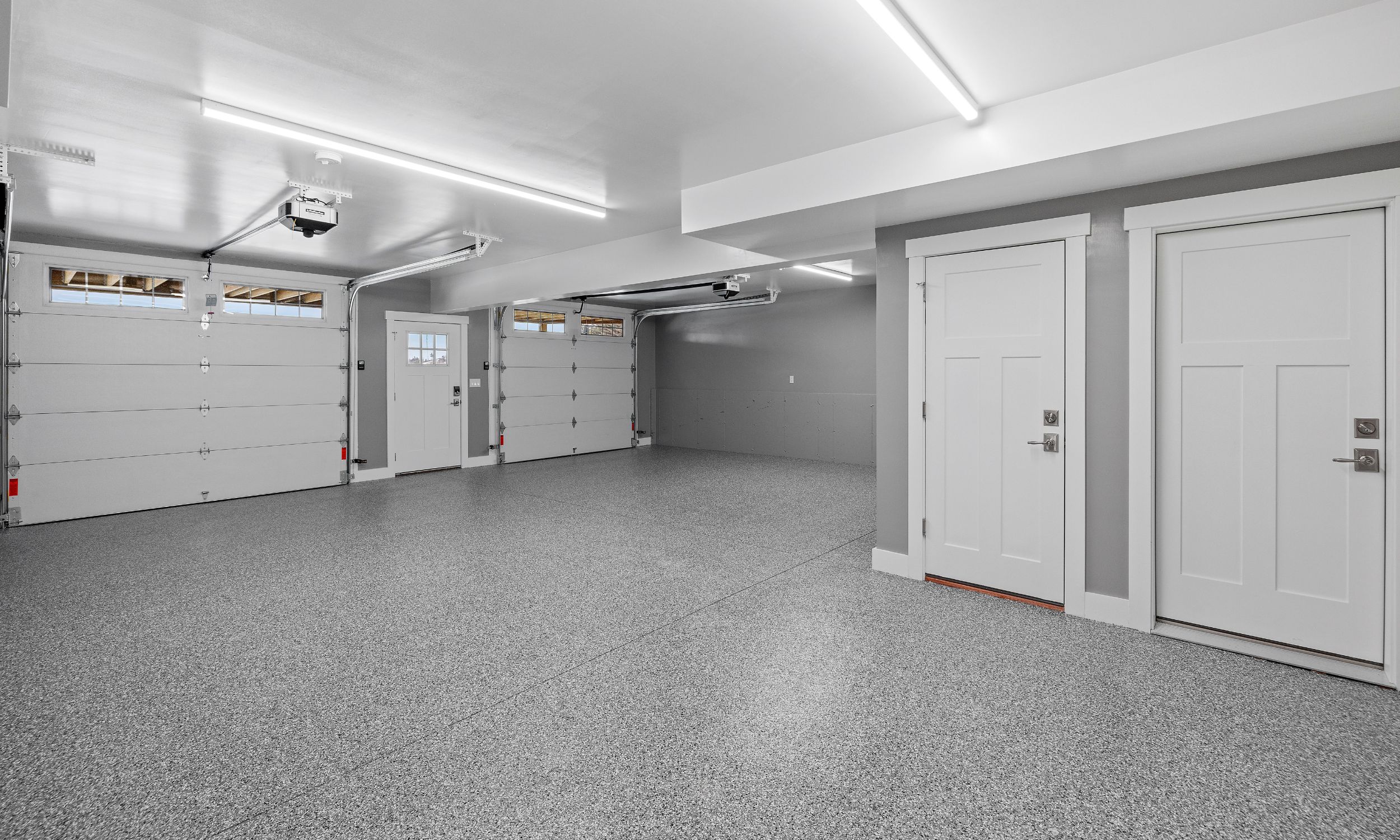
Before exploring which epoxy systems work best, you need to understand what makes basement moisture such a formidable opponent. Below-grade concrete exists in constant contact with soil that contains varying amounts of moisture depending on weather, drainage, and groundwater conditions.
How Ground Water Affects Below-Grade Spaces
Ground water exerts hydrostatic pressure against basement walls and floor slabs, pushing moisture through the porous concrete structure. Even properly waterproofed basements experience moisture vapor transmission as water molecules move from areas of high concentration in the soil to lower concentration inside the basement. This natural migration happens continuously, and it accelerates when external moisture sources increase from rain, snow melt, or rising water tables. The concrete itself acts like a sponge, absorbing moisture from below and releasing it as vapor into the basement environment.
Signs of Moisture Problems in Basement Concrete
You might notice efflorescence, those white crystalline deposits that form when mineral salts migrate to the concrete surface with moisture. Damp spots, musty odors, and visible water stains all indicate active moisture issues. Sometimes the concrete feels cool or slightly damp to the touch even when no obvious water appears. These signs warn that moisture vapor transmission rates may exceed what standard flooring systems can handle. Ignoring these indicators before installing flooring almost guarantees premature coating failure through delamination, bubbling, or complete adhesion loss.
Why Standard Epoxy Systems May Not Be Enough
Many property owners assume any epoxy coating will solve their basement flooring needs, but this assumption leads to disappointing results when moisture isn’t properly addressed. Standard epoxy formulations work excellently in dry, above-grade applications but lack the specific properties needed to combat continuous moisture vapor pressure from below.
Moisture Vapor Transmission Rates Explained
The Epoxy Flooring Systems Smithfield, Etobicoke, ON installations require understanding moisture vapor transmission rates, typically measured in pounds per 1000 square feet per 24 hours. Most standard epoxies tolerate transmission rates up to 3 to 5 pounds, but many basement slabs exceed these thresholds, especially older construction without vapor barriers beneath the concrete. When moisture vapor transmission exceeds the coating’s tolerance, pressure builds beneath the epoxy layer, eventually breaking the adhesive bond and causing coating failure. This explains why some basement floors look perfect initially but develop problems within months as seasonal moisture patterns change.
100% Solids Epoxy Systems for Maximum Moisture Resistance
The composition of epoxy significantly affects its moisture handling capabilities. Systems categorized by their solids content perform very differently when moisture becomes a factor in the installation environment.
How Solids Content Impacts Performance
GLI Epoxy Flooring recommends 100% solids epoxy formulations for challenging basement applications. These systems contain no solvents or water carriers that evaporate during curing, meaning everything you apply becomes part of the finished coating. This creates a denser, less permeable barrier with superior moisture resistance compared to solvent-based or water-based epoxies. The Epoxy Flooring Smithfield, ON projects using 100% solids systems show dramatically better performance in high-moisture environments. These formulations handle higher moisture vapor transmission rates without delamination, and they maintain adhesion even when substrate conditions aren’t perfect.
Application Requirements for High-Solids Systems
While 100% solids systems offer superior moisture protection, they demand precise application techniques. These products have shorter working times and require specific temperature ranges for proper curing. The viscosity differs from lower-solids systems, affecting how the material spreads and self-levels. Professional installation becomes particularly important because application errors compound quickly with these high-performance materials. The investment in 100% solids epoxy makes sense for basement applications where moisture concerns justify the additional cost and installation complexity.
Moisture-Mitigating Primer Technologies
Even the best topcoat systems benefit from specialized primers designed specifically to address moisture vapor transmission. These primers serve as the critical first line of defense in moisture management strategies.
Vapor Barrier Primers and Their Function
Moisture-mitigating primers create a semi-permeable barrier that slows moisture vapor transmission to manageable levels while allowing the coating system to breathe enough to prevent pressure buildup. The Epoxy & Flake Floor Installation Smithfield, ON approach often incorporates these specialized primers when moisture testing reveals elevated transmission rates. These primers contain technologies that react with moisture and CO2 to form a crystalline structure within the concrete pores, physically blocking moisture pathways. Other formulations use flexible polymers that accommodate substrate movement while maintaining their moisture-blocking properties. GLI Epoxy Flooring evaluates which primer technology matches specific moisture conditions and substrate characteristics in each basement project.
Polyaspartic Topcoats as Additional Moisture Defense
The final layer in a moisture-resistant flooring system plays a crucial role in overall performance. Polyaspartic topcoats offer advantages over traditional epoxy topcoats in demanding moisture environments.
UV Stability and Moisture Blocking Properties
Polyaspartic coatings cure through a different chemical reaction than epoxies, resulting in a coating with exceptional density and impermeability. These topcoats handle moisture vapor pressure better than epoxy alone, and they resist yellowing from any UV exposure basements might receive through windows or doors. The Concrete Floor Installation in Smithfield, Etobicoke, ON using polyaspartic topcoats creates a hybrid system that leverages epoxy’s adhesion and moisture-mitigating primers’ blocking properties, then seals everything with polyaspartic’s superior barrier characteristics. This layered approach addresses moisture from multiple angles, significantly improving system performance in challenging conditions.
Pre-Installation Moisture Testing Requirements
No matter which system you select, proper moisture testing before installation determines whether conditions fall within acceptable parameters for coating application. Skipping this step invites problems regardless of product quality.
Calcium Chloride and RH Testing Methods
The Epoxy Floor Coating Installation Smithfield, ON process should always include moisture testing using recognized industry methods. Calcium chloride testing measures moisture vapor emission rates at the concrete surface over a specific time period, typically 60 to 72 hours. This test reveals how much moisture actively transmits through the slab. Relative humidity testing using in-situ probes measures moisture content within the concrete at 40% of the slab depth, providing data about moisture conditions that will affect the coating long-term. GLI Epoxy Flooring uses both testing methods when conditions warrant, as they provide complementary information about different aspects of moisture presence. Test results guide system selection, primer choice, and sometimes reveal conditions requiring remediation before any coating application.
Long-Term Moisture Management Strategies
Successful basement flooring involves more than just selecting moisture-resistant coatings. Comprehensive moisture management requires attention to factors beyond the flooring system itself. Exterior drainage, gutters, downspouts, and proper grading all affect how much water reaches your foundation. Interior dehumidification helps control ambient humidity that contributes to moisture vapor transmission. Addressing foundation cracks or gaps prevents direct water intrusion that no coating can withstand. The flooring system works as part of an integrated approach rather than a standalone solution. Property owners who invest in both proper coatings and good moisture management practices see the best long-term results. Regular monitoring for signs of moisture problems allows early intervention before small issues become major coating failures.
Conclusion
Selecting the right epoxy flooring system for your Smithfield basement hinges on understanding moisture challenges and matching technology to conditions. Standard epoxy coatings often fall short in below-grade applications where moisture vapor transmission creates ongoing pressure against coating adhesion. 100% solids epoxy formulations, moisture-mitigating primers, and polyaspartic topcoats represent the best defense against these conditions. Proper pre-installation moisture testing ensures you identify potential problems before they cause coating failure. When combined with comprehensive moisture management strategies, these specialized systems create basement floors that perform reliably for years despite challenging moisture environments.
FAQs
What moisture vapor transmission rate can epoxy systems typically handle?
Standard epoxy systems tolerate moisture vapor transmission up to 3 to 5 pounds per 1000 square feet per 24 hours, while specialized moisture-mitigating systems can handle rates of 8 to 15 pounds or higher depending on the specific products and primer technologies used.
How long should I wait after waterproofing before installing epoxy in my basement?
Most waterproofing systems require 30 to 90 days of curing time before epoxy installation, though exact timing depends on the waterproofing method used. Conduct moisture testing to verify the slab has reached acceptable moisture levels rather than relying solely on elapsed time.
Can epoxy be applied over existing basement floor paint or sealers?
Existing coatings must be completely removed before epoxy installation to ensure proper adhesion. Previous paint or sealers prevent the epoxy from bonding directly to the concrete substrate, leading to delamination and coating failure regardless of the epoxy system quality.
Do all Smithfield basements need moisture-mitigating primers?
Not necessarily, but moisture testing determines whether standard or specialized systems are required. Basements with moisture vapor transmission rates within normal ranges may perform well with quality 100% solids epoxy alone, while higher rates demand moisture-mitigating primer technologies.
How soon can I use my basement after moisture-resistant epoxy installation?
Initial foot traffic is typically safe after 24 to 48 hours, but full cure requiring heavy use takes 5 to 7 days. Moisture-resistant systems may require slightly longer cure times than standard epoxies, and temperature affects curing speed significantly.