Toronto homeowners considering a garage or basement upgrade often ask the same question before they commit. Does epoxy flooring increase home value in Toronto, or is it just another finish that looks good in photos? The honest answer matters.
Spending $3,000 to $8,000 on a floor without knowing how buyers will react is a real risk. At GLI Epoxy Flooring, we install residential epoxy flooring in Toronto homes across the GTA. We have seen which features move buyers and which get ignored.
How Much Does Epoxy Add to a Toronto Home’s Value
Quality epoxy flooring adds roughly 5 to 15 percent in perceived value. The lift applies to the part of the home where it sits. The garage portion of the property is where most of that uplift shows up.
For a typical Toronto detached house selling near $1.4 million in 2026, the math is direct. A coated 2-car garage adds a $4,000 to $10,000 perceived bump at offer time. The range climbs higher in premium GTA neighbourhoods and lower in starter markets.
Buyers do not always see a dollar-for-dollar bump on the appraisal sheet. The real value shows up in three other places. Sellers see faster sales, fewer price negotiations, and stronger listing photos. Industry data points to 60 to 80 percent direct ROI on professional installations. Another 20 to 40 percent comes back in soft gains like time-to-sale.
What Toronto Buyers Actually Notice in the Garage During a Showing
Every buyer walks into the garage during a Toronto showing. Real estate agents in the GTA almost always end the tour there. Most homeowners underestimate how loud that signal really is.
The First Ten Seconds When the Garage Door Opens
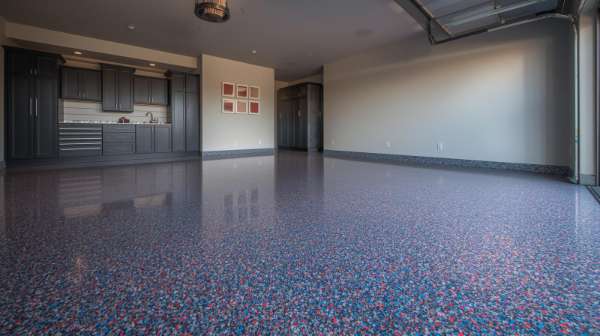
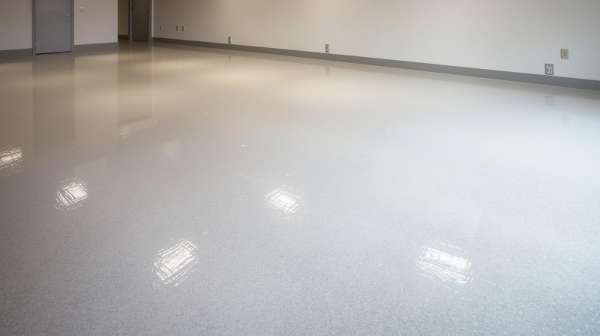
Open the door of an unfinished Toronto garage in February. Buyers see a grey slab with white salt streaks, cracked corners, and dust on every surface. Open the same door after a professional epoxy install. Buyers see a glossy, even floor that reflects the overhead light. The space feels brighter, larger, and newer. That single perception shift can be worth thousands at offer time.
Salt Stains, Pitting, and Cracks Buyers Spot Immediately
Toronto winters drag road salt onto every garage slab from November through April. Untreated concrete soaks up the salt, leaves white deposits, and slowly pits across the surface. Buyers read those marks as deferred maintenance. They wonder what else has not been looked after. Working with experienced epoxy garage floor installers in Toronto solves the problem before it spreads. A properly prepped and coated slab locks salt and moisture out for the next decade or longer.
How Buyers Reframe the Garage as Bonus Living Space
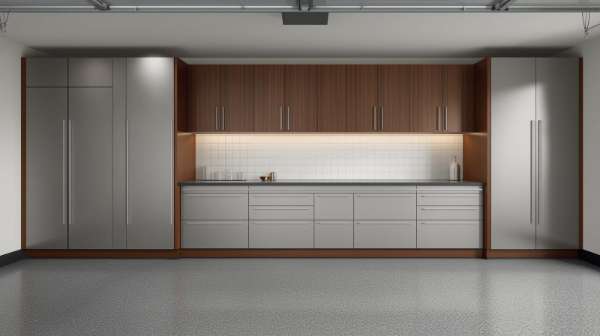
More Toronto buyers in 2026 see the garage as flexible space, not just car storage. Home gyms, woodworking benches, motorbike storage, and golf simulators all show up in GTA garages now. A clean epoxy floor lets buyers visualise those uses immediately. GLI Epoxy Flooring has finished garages across the GTA. The floor often becomes a selling feature mentioned by name in offers.
Why Toronto’s Basement Culture Multiplies Epoxy’s Value Impact
Toronto’s basement culture is unlike most North American markets. Finished basements with rec rooms, in-law suites, rental units, and home gyms are normal across the GTA. A finished basement adds usable square footage that buyers value.
Carpet in a Toronto basement reads as a moisture risk. Vinyl plank reads as a temporary fix. Bare or painted concrete reads as unfinished. A properly installed epoxy basement flooring in Toronto shifts how buyers see the space. It reads as permanent, modern, and ready for any use the next owner wants.
Basement-suite rentals in the GTA generate $1,500 to $2,800 per month depending on neighbourhood and unit size. Buyers running the math on rental income notice the floor. A surface that handles tenant turnover, moisture, and cleaning without damage protects future cash flow. That protection has a real number attached during negotiations.
How Much Does Epoxy Flooring Cost in Toronto in 2026
Professional epoxy flooring in Toronto costs $5 to $12 per square foot in 2026 for a standard installation. Garage prices typically land between $2,000 and $5,000 for a 2-car space. Basement projects range from $4,000 to $12,000 depending on size and finish complexity. Prices vary by slab condition, system type, and any prep work required.
The most common driver of cost at GLI Epoxy Flooring is the state of the concrete before coating. Cracked or oily slabs need more prep, and prep work separates a 2-year floor from a 20-year floor. Skipping it to save $500 today often costs much more later. The homeowner loses the full value of the install when the coating fails before sale.
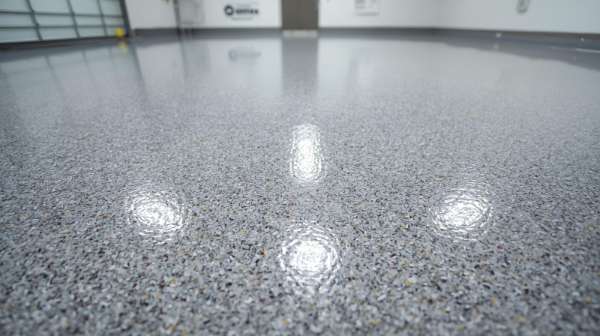
Decorative finishes like metallic, quartz, or flake systems add roughly $1 to $3 per square foot over a solid colour. The aesthetic upgrade matters for resale because buyers respond to texture and shine. For full numbers across project types and add-ons, see our detailed Toronto cost breakdown.
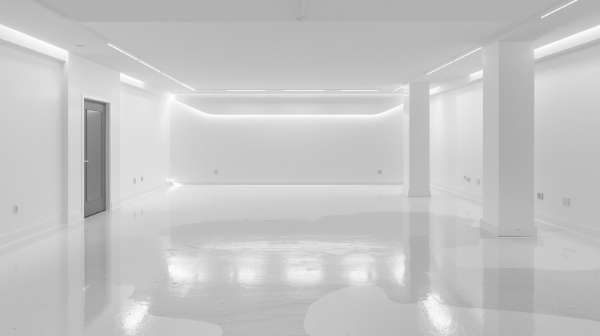
Epoxy vs Polished Concrete, Tile, and Bare Slab: What Wins on Toronto Resale
Toronto homeowners often weigh epoxy against polished concrete, ceramic tile, vinyl plank, or just leaving the slab bare. Each option carries a different value impact on resale. The table below shows how each one performs on what buyers actually care about.
| Flooring Option | Toronto Cost (per sq ft, 2026) | Typical Lifespan | Visual Impact at Showing | 10-Year Maintenance Cost |
|---|---|---|---|---|
| Professional Epoxy | $5–$12 | 15–20 years | High (glossy, modern) | Low ($100–$300) |
| Polished Concrete | $8–$15 | 20+ years | Medium-high (industrial look) | Low ($150–$400) |
| Ceramic Tile | $10–$20 | 15–25 years | Medium (style-dependent) | Medium ($500–$1,200 for cracked tiles) |
| Vinyl Plank | $4–$9 | 7–10 years | Low-medium (looks temporary in a garage) | Medium ($800–$1,500 if replaced) |
| Bare Concrete | $0 | Indefinite, but degrades | Negative (looks unfinished) | High ($1,000+ in salt damage repair) |
Epoxy outperforms most alternatives on cost-per-year and visual impact, though the right system matters. Our metallic epoxy system handles light better than a flat solid colour. The shimmer is why it photographs well in real estate listings. Polished concrete is the closest competitor and works in modern homes. It costs more upfront and shows wear in heavy-traffic areas faster than a properly cured epoxy.
Want to know how much value epoxy would add to a specific Toronto home? Call (289) 236-8371 for a free in-person quote, or book a free site visit through our contact page.The assessment is honest, no obligation, no pressure.
Where in the GTA Does Epoxy Add the Most Home Value
Not every Toronto neighbourhood values an epoxy floor the same way. Sale prices, buyer demographics, and housing stock all shape how much an upgraded garage or basement moves the needle. The patterns below come from installing across the GTA and watching which projects sold faster than the comps.
Etobicoke and Mississauga Detached Homes
Detached homes in Etobicoke and Mississauga commonly sell in the $1.2 to $1.8 million range in 2026. Buyers at this price point expect finished spaces. An epoxied 2-car garage in Etobicoke sees a strong value uplift. The bump often runs $7,000 to $12,000 because buyers compare against newer custom builds in nearby Vaughan.
North York, Scarborough, and East York Semis and Bungalows
Mid-market semi-detached and bungalow stock in North York, Scarborough, and East York typically sells between $900,000 and $1.3 million. The dollar impact is smaller in absolute terms but proportionally just as strong. First-time buyers in these neighbourhoods notice maintenance signals carefully. A clean epoxy garage often shortens time-to-sale by two to four weeks in this segment.
Vaughan, Aurora, and Richmond Hill Custom Builds
Custom and semi-custom homes in Vaughan, Aurora, and Richmond Hill often run $1.5 million and up. Buyers in this tier expect epoxy or polished concrete as standard. An unfinished garage in a $1.8 million home actively hurts the listing because it reads as incomplete. Skipping the coating can knock $5,000 to $15,000 off offer prices in this market.
Downtown Toronto Condos and Parking Lockers
Downtown condo owners cannot epoxy their building’s parking garage, but storage lockers and townhouse garages are a different story. A coated locker floor signals the owner takes care of details. For ground-floor or stacked townhouses in neighbourhoods like Liberty Village or Leslieville, the math still works. A finished garage epoxy can add $3,000 to $6,000 at sale.
The Epoxy Mistakes That Actively Hurt Toronto Resale Value
Three specific mistakes turn an epoxy floor from a value asset into a value drain. Each one shows up regularly in Toronto resale projects, and each one is preventable with the right planning before installation.
Cheap Big-Box Kits That Peel Within Two Years
DIY epoxy kits from hardware stores often fail within 18 to 24 months in Toronto’s freeze-thaw climate. A peeling floor at sale time is worse than no coating. Buyers see it as a project they will have to redo. The $300 kit becomes a $3,000 negative on the offer. Professional-grade systems with proper primers handle Toronto winters for 15 to 20 years.
Bold Colours or Aggressive Metallics That Polarise Buyers
Bright red metallic floors look great in promotional photos. They look terrible to buyers who do not share the original homeowner’s taste. Resale-focused installations stay neutral. Light grey, charcoal, warm tan, and subtle flake patterns appeal to the widest buyer pool. Save bold metallic finishes for spaces where the current owner is staying long-term.
Skipping Proper Concrete Grinding Before Coating
The single biggest predictor of a long-lasting epoxy floor is what happens before the resin touches the slab. Diamond grinding opens the concrete pores so the epoxy can bond chemically, not just sit on the surface. Floors installed without grinding often delaminate within a few years. For broader guidance on protecting a home as an investment, see CMHC’s Homebuying Step by Step guide. It covers maintenance planning, renovation rebates, and how upgrades fit into long-term value.
The Bottom Line for Toronto Homeowners Thinking About Resale
Does epoxy flooring increase home value in Toronto? Yes, when installed correctly with a quality system on a properly prepared slab. The value shows up most clearly on the garage portion of detached and semi-detached homes. Expect a $4,000 to $10,000 perceived bump on a typical 2-car project. The bigger win is often the faster sale and stronger offers that follow.
For Toronto homeowners weighing the decision, the floor under the basement and garage matters. It is one of the few upgrades that pays back both during ownership and at sale. GLI Epoxy Flooring has installed finishes across the GTA that still look new a decade later. Homeowners can also explore our deeper basement flooring guide for system details that matter most below grade.
For an honest assessment on a specific Toronto property, call GLI Epoxy Flooring at (289) 236-8371 .Or reach out to our team today through the contact page. The first visit is free, the quote is itemised, and the work is guaranteed for the long haul.
Frequently Asked Questions
1. How much does an epoxy garage floor actually add to a home’s sale price in Toronto?
A professional epoxy garage floor adds 5 to 15 percent in perceived value to a Toronto home’s garage portion. For a typical $1.2 to $1.5 million detached property in 2026, that means $4,000 to $10,000 on a 2-car garage. Premium GTA neighbourhoods see the highest end of the range.
2. Is epoxy flooring better than polished concrete for Toronto resale value?
Epoxy is the safer choice for broad Toronto resale appeal. Polished concrete works better in modern lofts or contemporary builds. It costs $8 to $15 per square foot upfront. Epoxy at $5 to $12 per square foot appeals to a wider GTA buyer pool and carries lower polarisation risk.
3. Will an epoxy floor in a Toronto basement help with rental income or in-law suite value?
Yes, an epoxy basement floor directly supports rental income and in-law suite value in Toronto. Basement suites in the GTA rent for $1,500 to $2,800 per month. A coated floor signals the unit is built for tenant turnover. The added value can run $5,000 to $12,000 in rental-friendly neighbourhoods.
4. Do Toronto buyers actually notice the floor in the garage during a showing?
Buyers absolutely notice the garage floor, even when they cannot say why a home felt cared-for or neglected. Toronto agents almost always end home tours in the garage, making it one of the last impressions before the offer. A clean coated floor reinforces every positive note from the showing.
5. Should I epoxy a garage right before selling a Toronto home?
Installing epoxy two to four weeks before listing is the sweet spot for Toronto homes. The system takes 24 to 72 hours to cure fully. Another week or two clears storage and stages the space. Spring listings in March, April, and May see the strongest impact from a freshly coated garage.
6. What happens if an epoxy floor starts peeling before listing a home in the GTA?
A peeling epoxy floor actively reduces home value in the GTA, often by more than the original install cost. Buyers see flaking coating as a project they will inherit, and they price the repair into their offer. The best fix is full removal followed by proper grinding and a professional quality system.